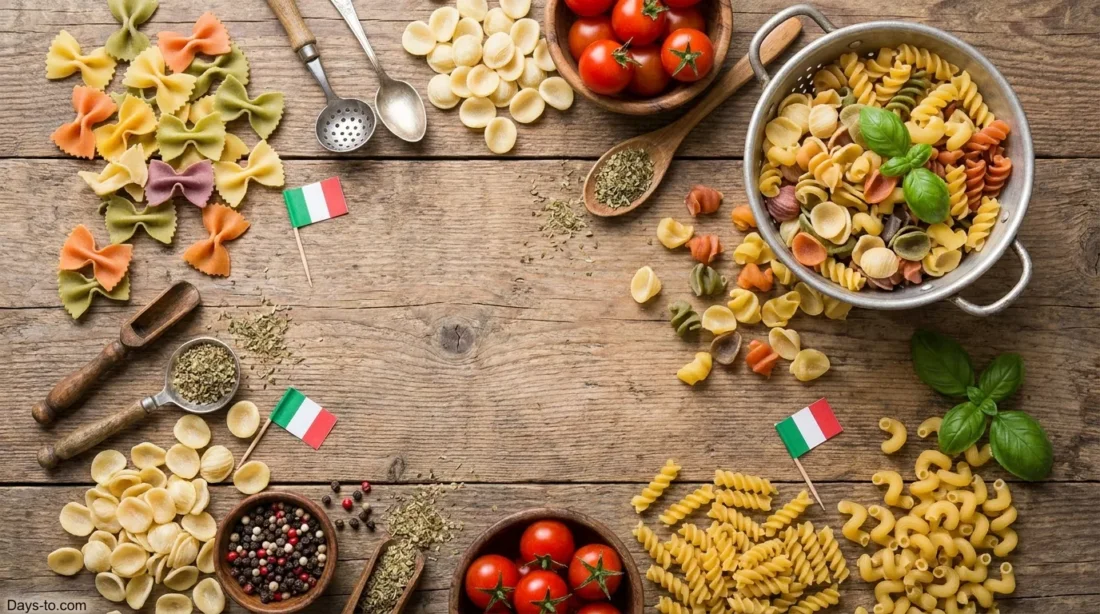
National Pasta Day
| Year | Day | Date | Days To |
|---|---|---|---|
| 2027 | Sun | October 17, 2027 | 355 days |
| 2028 | Tue | October 17, 2028 | 721 days |
| 2029 | Wed | October 17, 2029 | 1086 days |
| 2030 | Thu | October 17, 2030 | 1451 days |
| 2031 | Fri | October 17, 2031 | 1816 days |
| 2032 | Sun | October 17, 2032 | 2182 days |
| 2033 | Mon | October 17, 2033 | 2547 days |
| 2034 | Tue | October 17, 2034 | 2912 days |
| 2035 | Wed | October 17, 2035 | 3277 days |
National Pasta Day is observed every year on October 17. It is a light, food-centered calendar observance, yet it also points to a much older story: the long history of grain, water, dough, drying, boiling, sauces, family meals, trade, and local taste. Pasta looks simple on the plate. Behind it, though, stands a practical food tradition shaped by climate, storage needs, farming, home kitchens, and regional identity.
The day is most closely known in the United States, where many national food days appear on calendars, restaurant promotions, food blogs, and community posts. It is not a federal holiday. Offices and schools do not close for it. Still, National Pasta Day has become easy to recognize because pasta is familiar, affordable, and endlessly adaptable.
Date and Basic Meaning
| Item | Information |
|---|---|
| Observed Date | October 17 each year |
| Main Theme | Celebrating pasta as a widely loved food with long cultural roots |
| Holiday Type | Food observance, not a public or federal holiday |
| Common Activities | Cooking pasta, learning about pasta shapes, visiting Italian-style restaurants, sharing family recipes |
| Best Known In | The United States, though pasta itself belongs to many food cultures |
| Related Food Themes | Noodles, durum wheat, semolina, sauce traditions, regional pasta shapes |
The observance gives people a simple reason to look closer at a food they may already eat often. A bowl of spaghetti, a tray of baked ziti, a plate of ravioli, or a cold pasta salad can all fit the day. That wide range is part of the appeal. Pasta can be formal or plain, handmade or boxed, slow-cooked or ready in minutes.
Why October 17 Is Linked With Pasta
National Pasta Day appears on many food calendars as an annual event on October 17. Food observances of this type often grow through a mix of public interest, food industry calendars, recipe publishers, restaurants, and social sharing. They rarely begin with one single ceremony or official law. Pasta Day followed that path: practical, popular, and easy for people to take part in.
October also fits the mood of pasta for many households in the Northern Hemisphere. Cooler weather invites dishes that feel warm and filling: baked pasta, soups with small pasta, creamy sauces, tomato-based ragù, and oven-ready casseroles. The date is not tied to one strict ritual. It works because the food does.
Pasta Before the Calendar Day
Pasta itself is far older than the observance. Many food historians treat pasta as a broad family of foods made from dough shaped into pieces and cooked, most often by boiling. In Mediterranean food history, durum wheat became especially useful because it produced firm dough and dried well. Drying mattered. Food that could be stored, carried, and cooked later had clear value.
Several cultures developed noodle-like and pasta-like foods through their own grain traditions. For this reason, pasta history should not be reduced to one neat origin story. Italian pasta culture became especially famous, but the wider story includes wheat farming, milling, kneading, shaping, drying, boiling, and seasoning across many regions. Simple steps, refined over time.
By the Middle Ages, dried pasta had gained a strong place around parts of the Mediterranean. It traveled well by sea, lasted longer than fresh dough, and suited busy ports and towns. Later, pasta production grew with improved mills, drying methods, metal dies, and factory equipment. At home, the food kept its intimate side. Grandmothers rolled dough. Families cut shapes. Local names stayed alive.
How Pasta Became a Daily Food
Pasta became popular not only because it tasted good, but because it solved everyday food problems. It could be made from common grains, stored in dry form, cooked in boiling water, and combined with whatever was available. Olive oil, cheese, herbs, vegetables, seafood, beans, and tomato sauces all found a place beside it.
Its shape also affects the meal. Long strands suit smooth sauces. Ridges hold thicker ones. Tubes catch small pieces of meat or vegetables. Tiny shapes work in soup. Filled pasta turns dough into a pocket. This is why pasta is not just one food. It is a system of shapes. Quietly clever, that system.
Shape, Sauce, and Texture
| Pasta Form | Typical Use | Why It Works |
|---|---|---|
| Spaghetti | Tomato sauce, garlic oil, seafood-style dishes | Long strands coat well with lighter sauces |
| Penne | Baked pasta, chunky sauces, creamy sauces | The tube shape holds sauce inside and outside |
| Fusilli | Pasta salads, vegetable sauces | Spirals catch small ingredients and dressing |
| Ravioli | Filled pasta meals | The filling adds flavor before sauce is added |
| Orzo | Soups, salads, side dishes | Small size cooks quickly and mixes easily |
| Lasagna Sheets | Layered baked dishes | Flat sheets create structure between sauce and filling |
People often think sauce makes the pasta dish. Shape matters just as much. A smooth sauce can slide off a flat surface, while ridged pasta gives it something to hold. In a well-matched dish, pasta and sauce feel joined rather than placed together.
Fresh Pasta and Dried Pasta
National Pasta Day often brings both fresh and dried pasta into the same conversation. Fresh pasta usually contains soft wheat flour and eggs, though recipes vary. It has a tender bite and cooks fast. Dried pasta, often made with semolina from durum wheat, has a firmer texture and a longer shelf life.
Neither one is “better” in every case. Fresh pasta suits delicate sauces, filled shapes, and soft textures. Dried pasta suits pantry cooking, strong sauces, and the familiar firm bite many people call al dente. The choice depends on the dish. It always has.
Fresh Pasta
- Soft texture and short cooking time
- Often used for filled pasta and ribbon shapes
- Best when served soon after making or buying
Dried Pasta
- Firm bite and long pantry life
- Works well with thick sauces and baked dishes
- Easy to store, measure, and cook on busy days
What People Usually Do on National Pasta Day
The most common way to observe the day is simple: cook pasta. Some people make a favorite family dish. Others try a new shape or sauce. Restaurants may offer pasta specials, while recipe sites often publish collections around classic pasta meals. Social media adds another layer, with photos, short cooking notes, and personal stories.
At home, the day can become a small food lesson. Children can compare shapes. Adults can talk about texture, sauce, or how pasta is made. A single package of pasta can open a conversation about wheat, drying, boiling water, salt, regional naming, and family memory. Not forced. Just natural.
Common Ways People Mark the Day
- Preparing a familiar pasta dish at home
- Trying a pasta shape not often used in the household
- Reading about Italian regional pasta traditions
- Making fresh dough by hand
- Sharing a family recipe with younger relatives
- Pairing pasta with vegetables, legumes, herbs, or a simple sauce
Pasta in American Food Culture
In the United States, pasta became a household staple through many paths: immigrant food traditions, canned and boxed pantry products, school meals, restaurants, cookbooks, and family cooking. Dishes such as spaghetti with tomato sauce, macaroni and cheese, lasagna, baked ziti, and pasta salad became familiar across many communities.
American pasta habits also show how flexible the food can be. A pasta dish may be Italian-inspired, family-adapted, regional, budget-friendly, vegetarian, festive, or plain after a long workday. Sometimes the sauce simmers for hours. Sometimes it comes together in ten minutes. Both belong to the story.
Useful Pasta Terms
Some pasta words appear often on menus and recipes. Knowing them makes the food easier to understand, especially on National Pasta Day, when people may try a new dish or read about pasta history.
| Term | Meaning |
|---|---|
| Al Dente | Cooked until firm to the bite, not soft or mushy |
| Semolina | Coarse flour often made from durum wheat |
| Durum Wheat | A hard wheat valued for pasta because it makes firm dough |
| Bronze-Cut | Pasta shaped through bronze dies, often leaving a rougher surface for sauce |
| Ragù | A slow-cooked sauce, often rich and thick |
| Pastina | Very small pasta shapes often used in soups or simple meals |
These terms also show why pasta is more technical than it may first appear. The flour changes the bite. The cut changes the surface. The cooking time changes the dish. Even a small difference in texture can alter the whole meal.
Why Pasta Shapes Have Names
Many pasta names come from shape, size, or visual likeness. Farfalle is often associated with bow-tie or butterfly shapes. Penne refers to a quill-like cut. Linguine means small tongues. The names make pasta easier to identify, but they also preserve a small piece of language and place.
That naming habit helps explain why pasta feels personal. A shape may remind someone of a grandmother’s kitchen, a restaurant meal, a school lunch, or a holiday table. Food memory is rarely abstract. It sits in the hand, on the fork, in the smell of sauce warming in a pan.
A Day Built Around a Simple Food
National Pasta Day does not need a fixed ceremony. Its value comes from attention. It asks people to notice a familiar food and see more in it: the grain, the shape, the sauce, the region, the family habit, the shared table. That is enough for a calendar observance built around food.
Some food days feel invented and thin. This one lasts because pasta already has a place in daily life. It is easy to cook, easy to change, and easy to connect with memory. A plain dish, yes. Also a patient one.
Common Questions About National Pasta Day
When Is National Pasta Day?
National Pasta Day is observed on October 17 each year. It is a food observance rather than a public holiday.
Is National Pasta Day an Official Holiday?
No. It is not a federal holiday. It is a popular food calendar day that people mark through cooking, restaurant meals, recipes, and food-related posts.
What Food Is Linked With the Day?
The day can include many pasta dishes, such as spaghetti, lasagna, ravioli, penne, fusilli, macaroni, or pasta salad. There is no single required dish.
Why Do Pasta Shapes Matter?
Pasta shapes affect how sauce clings, how the dish feels, and how ingredients mix. Long strands, ridged tubes, spirals, sheets, and filled shapes all serve different cooking uses.
What Is the Difference Between Fresh and Dried Pasta?
Fresh pasta is softer and cooks quickly. Dried pasta lasts longer in the pantry and often has a firmer bite. Each type works better with different dishes and sauces.