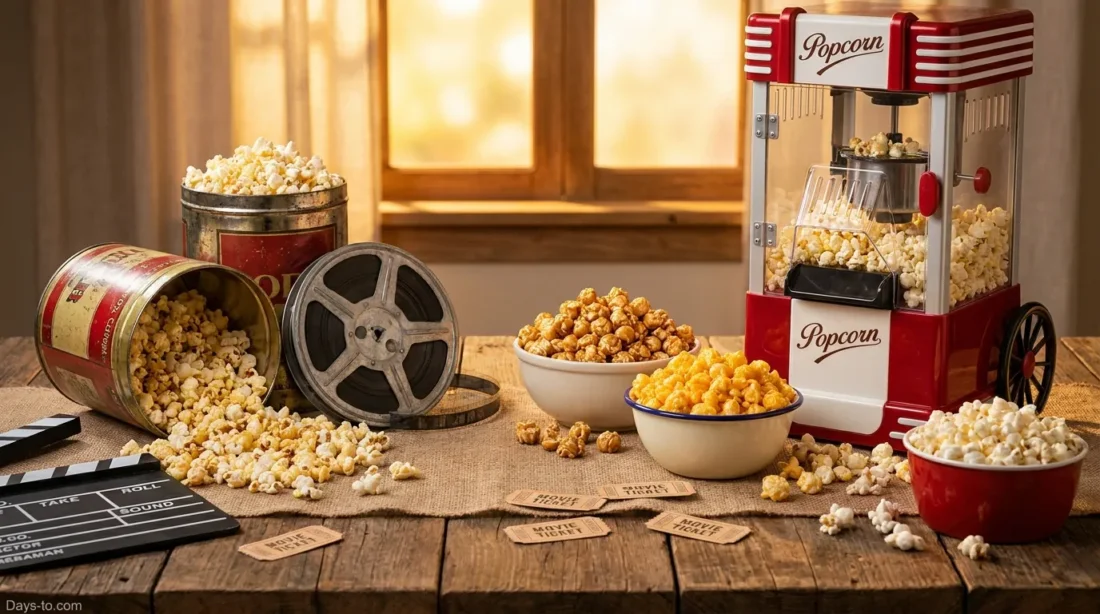
National Popcorn Day
| Year | Day | Date | Days To |
|---|---|---|---|
| 2027 | Tue | January 19, 2027 | 83 days |
| 2028 | Wed | January 19, 2028 | 448 days |
| 2029 | Fri | January 19, 2029 | 814 days |
| 2030 | Sat | January 19, 2030 | 1179 days |
| 2031 | Sun | January 19, 2031 | 1544 days |
| 2032 | Mon | January 19, 2032 | 1909 days |
| 2033 | Wed | January 19, 2033 | 2275 days |
| 2034 | Thu | January 19, 2034 | 2640 days |
| 2035 | Fri | January 19, 2035 | 3005 days |
National Popcorn Day is observed on January 19 each year in the United States, giving a familiar snack its own place on the calendar. The day is light, family-friendly, and easy to understand: it celebrates popped corn, the small food with a long story behind it. What looks simple in a bowl has roots in agriculture, food science, movie culture, home kitchens, fairs, schools, and everyday American habits. Few snacks feel this ordinary. Fewer still carry so much history.
What National Popcorn Day Marks
National Popcorn Day is not a formal public holiday. Offices, schools, banks, and public services do not close for it. Instead, it works as a food observance: a calendar day used by families, snack brands, theaters, schools, libraries, and food lovers to notice a food that often sits in the background of daily life.
The meaning is simple. It honors popcorn as a snack, but it also opens a small window into maize history, heat, steam, food storage, cinema, and changing taste. In that sense, National Popcorn Day is more than a bowl on a table. It is a neat example of how an ordinary food can become part of shared culture.
When National Popcorn Day Is Celebrated
National Popcorn Day is commonly celebrated on January 19. The date appears in food calendars, retail promotions, school activity lists, and seasonal snack campaigns. It arrives during winter in the Northern Hemisphere, which fits the food well: popcorn is warm, easy to make indoors, and tied to movies, games, reading nights, and casual gatherings.
The observance does not follow a fixed legal ceremony. There is no official national ritual, no required meal, and no single authority that controls how it is marked. That is part of its charm. A family may make stovetop popcorn; a classroom may discuss how kernels pop; a theater may run a snack promotion. Quietly, the day works.
| Detail | Information |
|---|---|
| Observed Date | January 19 |
| Main Theme | Popcorn as a snack, cultural food, and simple food-science example |
| Holiday Type | Informal food observance |
| Common Settings | Homes, movie theaters, schools, libraries, community events, and snack promotions |
| Public Closure Status | No regular public closures are linked to the day |
Why Popcorn Has Its Own Day
Popcorn earned its own calendar day because it is both simple and memorable. It costs little, stores well, cooks fast, and can serve one person or a full room. It also carries a pleasing bit of surprise: hard kernels turn into soft white pieces in seconds. The sound, the smell, the sudden change — all of it makes popcorn feel active, not passive.
There is also a social reason. Popcorn rarely feels formal. People eat it while watching a film, walking through a fair, reading at home, or sitting with friends. It does not ask for a knife, plate, or ceremony. Hands reach into the same bowl. That small habit gives the snack a friendly place in ordinary life.
Many food observances feel narrow. This one does not. Popcorn connects farming, science, commerce, entertainment, nutrition, and memory. One day can hold all of that without becoming heavy.
The Older Story Behind Popped Corn
Popcorn begins with maize, a crop with a deep history in the Americas. Long before popcorn became a movie snack, different communities grew and used maize in many forms. Some types had kernels with the right structure for popping. When heated, those kernels could burst open into a light edible form. That old discovery still shapes the popcorn eaten today.
Not every corn kernel pops well. Popcorn comes from a type of maize with a hard outer shell and a small amount of water held inside the starchy center. Heat turns that water into steam. Pressure rises. Then the shell breaks, and the starch expands outward. So sudden, the change is. A hard seed becomes a soft flake.
This explains why popcorn feels different from many other snacks. It is not only cooked; it is transformed. The process shows heat, moisture, pressure, and structure working together in a way that people can hear and see. That makes it useful in classrooms as well as kitchens.
Why the Kernel Pops
A popcorn kernel has three parts that matter most for popping: the hard outer hull, the starchy interior, and the moisture held inside. When the kernel heats evenly, steam pushes against the hull. Once the pressure becomes too much, the hull opens and the starch expands. The white part people eat is the expanded starch, cooled into a crisp shape.
Good popcorn depends on balance. Too little moisture and the kernel may not pop. Too much moisture and it may pop poorly. Heat that is too low may dry the kernel before pressure builds. Heat that is too high may scorch the outside. A small food, but exact in its own way.
| Part or Step | What Happens | Why It Matters |
|---|---|---|
| Hard Hull | Holds pressure inside the kernel as it heats | Allows steam to build before the kernel opens |
| Internal Moisture | Turns into steam during heating | Creates the force that makes the kernel burst |
| Starch Center | Softens, expands, and turns outward | Forms the fluffy edible piece |
| Cooling | The expanded starch sets into shape | Gives popcorn its light crisp texture |
Popcorn and American Snack Culture
Popcorn became deeply linked with American snack culture because it met several needs at once. It was portable, affordable, fragrant, and easy to sell in public places. Vendors could prepare it in front of customers, which made the snack part of the scene. The popping sound drew attention. The smell carried through the air. People noticed it before they tasted it.
Street stands, fairs, carnivals, and public events helped popcorn become familiar. Later, home poppers and packaged kernels made it common in kitchens. Its rise did not depend on luxury. Popcorn belonged to everyday spaces, and that gave it staying power. It was available, warm, and shareable.
Its link with movies became especially strong. Popcorn suited theater life because it was light, quick to serve, and easy to portion. The smell became part of the moviegoing experience. For many people, cinema popcorn now feels almost inseparable from the screen itself.
Why Movie Theaters and Popcorn Fit Together
The connection between popcorn and movie theaters grew because both sides benefited. Theatergoers wanted a snack that did not require a full meal setting. Theater operators wanted a food that could be served quickly and enjoyed during a show. Popcorn did both. It also filled the lobby with a warm smell, turning the concession stand into a visible part of the visit.
There is a practical side too. Popcorn is light by volume, so a serving can look generous without being heavy. It pairs easily with sweet or salty flavors. People can eat it slowly through a film. That steady rhythm helped it become a theater habit rather than a passing snack trend.
The Main Types of Popcorn
Popcorn does not all look the same once it pops. Two common popped shapes are often called butterfly and mushroom. These names describe shape, not flavor. Butterfly popcorn has uneven “wings” and a delicate look. Mushroom popcorn is rounder and stronger, which makes it useful for coatings such as caramel or chocolate-style coverings.
The difference matters because shape changes texture. Butterfly pieces catch seasoning in small ridges and feel light in the mouth. Mushroom pieces resist breaking and hold heavier coatings better. The choice depends on use. For a plain bowl at home, butterfly popcorn often feels natural. For coated snack mixes, rounder kernels hold up better.
| Type | Shape | Common Use | Texture Feel |
|---|---|---|---|
| Butterfly Popcorn | Irregular, open, wing-like pieces | Movie popcorn, home bowls, lightly seasoned snacks | Light, crisp, airy |
| Mushroom Popcorn | Rounder, denser popped pieces | Caramel corn and coated popcorn mixes | Firm, steady, less fragile |
How People Celebrate National Popcorn Day
Most people celebrate National Popcorn Day in small ways. They make a bowl at home, try a flavor they do not usually buy, watch a movie, or share popcorn at work or school. The day does not need a large event. A fresh batch is often enough.
Some schools use the day for simple science lessons. Popcorn gives teachers an easy way to explain heat and pressure without expensive equipment. Libraries may pair it with reading events. Community groups sometimes use popcorn for casual fundraisers or family nights. In retail settings, January 19 can bring small discounts, flavor samples, or themed displays.
At home, the day often turns into a taste comparison. Air-popped popcorn, stovetop popcorn, microwave popcorn, and ready-to-eat popcorn all feel different. The same base food can become buttery, salty, lightly sweet, spicy, cheesy, or plain. Simple, yet flexible.
- Movie night: popcorn fits naturally with family films, documentaries, or classic cinema.
- Food science activity: children can compare popped and unpopped kernels and observe the change.
- Flavor tasting: small bowls can show how salt, herbs, mild spices, or sweet coatings alter the snack.
- Reading time: popcorn works well for a quiet book evening because it is easy to serve and share.
Popcorn as Food Science
One reason popcorn stays interesting is that it shows food science in plain sight. The kernel is a sealed natural container. The moisture inside acts like fuel for the transformation. The hull serves as a pressure barrier. Heat starts the process. The pop is the moment the stored pressure releases.
This process also explains why old or poorly stored kernels may leave many “old maids,” the common name for kernels that do not pop. If kernels lose too much moisture, they cannot build enough steam. If they crack before cooking, pressure escapes early. Storage matters, quietly.
Popcorn also helps explain texture. The expanded starch cools into a crisp form because it spreads out fast and sets quickly. That light structure makes popcorn feel airy, even when a bowl looks large. Volume grows; weight does not grow with it.
Why Some Kernels Stay Unpopped
Unpopped kernels are usually linked to moisture, hull condition, or heat. A kernel needs enough internal water and a strong hull to pop well. If the hull has a tiny break, steam can leak out before pressure builds. If the kernel is too dry, there is not enough steam. If heat spreads unevenly, some kernels may scorch while others remain closed. The small details decide the result.
Popcorn in Homes, Schools, and Events
Popcorn works across many settings because it is informal. A home kitchen can make it in minutes. A school can use it for a lesson or class treat. A library can serve it during a reading event. A community hall can prepare it for guests without a full kitchen setup. That ease helps National Popcorn Day stay accessible.
The snack also carries a low-pressure social mood. People do not need to know special rules to enjoy it. They do not need formal dishes. They can season it lightly or leave it plain. In a shared bowl, popcorn feels casual. In small bags, it feels tidy and portable. In a theater tub, it becomes part of an outing.
For event planners, popcorn offers one more advantage: it can be prepared in large amounts without a complex menu. That is why it appears at school nights, fairs, small fundraisers, club meetings, and family programs. Easy to serve, easy to recognize.
Flavor Traditions Linked to Popcorn
Plain popcorn has a mild corn taste, which makes it open to many flavor styles. Butter and salt may be the most familiar pairing in American movie culture, but they are not the only option. Sweet coatings, cheese-style seasonings, herbs, cinnamon, caramel, and light spice blends can all change the character of the snack. The base stays simple; the topping sets the mood.
Texture plays a role in flavor too. Fine salt clings to small ridges. Melted butter coats uneven flakes. Caramel sets better on rounder pieces. Dry seasonings need a little surface grip, while heavy coatings need stronger popped shapes. A popcorn bowl may look casual, but shape and seasoning work together.
| Flavor Style | Common Ingredients | Best-Fitting Popcorn Texture |
|---|---|---|
| Classic Salty | Salt, butter, or mild oil | Light butterfly popcorn |
| Sweet | Caramel, cinnamon sugar, or light syrup coating | Rounder mushroom popcorn |
| Savory Herb | Dried herbs, garlic-style seasoning, mild cheese-style seasoning | Freshly popped kernels with ridges |
| Mixed Snack Bowl | Popcorn with nuts, pretzels, or cereal pieces | Firm popcorn that does not break easily |
Why Popcorn Feels Timeless
Popcorn has lasted because it changes without losing its identity. It can be made on a stovetop, in a microwave, in a hot-air popper, or in a theater machine. It can be served plain, salted, sweet, or coated. It can be part of a children’s activity or an adult movie night. Still, people recognize it at once. That familiar shape does a lot of work.
Many snacks depend on branding, packaging, or novelty. Popcorn depends first on a visible transformation. Kernels pop. A bowl fills. The smell rises. People hear it before they see it. Then the snack appears, warm and ready. Simple theater, right there in the kitchen.
National Popcorn Day keeps that ordinary moment on the calendar. It asks people to notice a food they may usually take for granted. Not every observance needs ceremony. Some only need a bowl, a little heat, and a reason to share.
Useful Details to Remember
- Date: National Popcorn Day is commonly observed on January 19.
- Holiday Type: It is an informal food observance, not a public closure day.
- Main Idea: The day celebrates popcorn as a snack with agricultural, scientific, and cultural roots.
- Common Link: Popcorn is strongly tied to moviegoing, home entertainment, fairs, and casual gatherings.
- Food Science: Kernels pop because heat turns internal moisture into steam, building pressure inside the hull.
Common Questions About National Popcorn Day
Is National Popcorn Day Always on January 19?
Yes, National Popcorn Day is commonly listed and observed on January 19. Since it is an informal food observance, celebrations can vary by school, business, home, or community group.
Is National Popcorn Day a Public Holiday?
No. National Popcorn Day does not close schools, government offices, banks, or public services. It is a light food-themed observance centered on popcorn.
Why Does Popcorn Pop?
Popcorn pops because each kernel contains moisture inside a hard hull. Heat turns that moisture into steam, pressure builds, and the kernel bursts open. The starch inside expands into the white edible shape.
Why Is Popcorn Linked With Movies?
Popcorn became linked with movies because it is easy to serve, easy to eat during a show, and has a strong smell that fits theater concession stands. Over time, the snack became part of the moviegoing habit.
Are All Corn Kernels Able to Pop?
No. Popcorn comes from a type of maize with the right hull strength, starch structure, and internal moisture. Other types of corn may cook well in different ways, but they do not pop like popcorn kernels.
A Small Food With a Long Memory
National Popcorn Day gives a familiar snack a clear date, but the story behind it reaches further than one calendar square. Popcorn carries the history of maize, the science of steam pressure, the rise of public snack stands, and the cozy habit of eating something warm while watching a story unfold. January 19 simply makes room for people to notice it.
In a kitchen, a classroom, a theater, or a small community event, popcorn keeps the same plain appeal. Kernels heat. The bowl fills. People gather. And for one day each year, this quiet snack gets the calendar space it has earned.