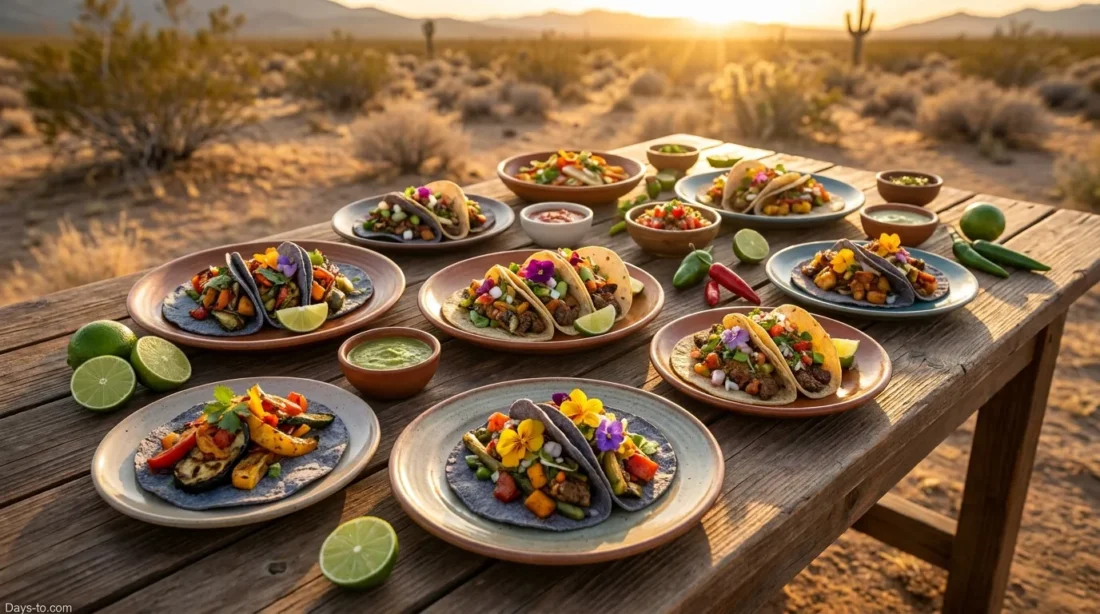
National Taco Day
| Year | Day | Date | Days To |
|---|---|---|---|
| 2027 | Tue | October 5, 2027 | 343 days |
| 2028 | Tue | October 3, 2028 | 707 days |
| 2029 | Tue | October 2, 2029 | 1071 days |
| 2030 | Tue | October 1, 2030 | 1435 days |
| 2031 | Tue | October 7, 2031 | 1806 days |
| 2032 | Tue | October 5, 2032 | 2170 days |
| 2033 | Tue | October 4, 2033 | 2534 days |
| 2034 | Tue | October 3, 2034 | 2898 days |
| 2035 | Tue | October 2, 2035 | 3262 days |
National Taco Day marks a lively food observance centered on the taco, a folded tortilla filled with savory ingredients and tied closely to Mexican food traditions. In the United States, the day has become a familiar calendar moment for restaurants, families, food writers, and anyone who enjoys a simple meal with a long story behind it. Since 2024, National Taco Day is observed on the first Tuesday in October, which places it neatly beside the weekly phrase “Taco Tuesday.”
Date and Basic Meaning
National Taco Day is not a federal public holiday. It is a food observance, shaped by restaurant culture, home cooking, social media traditions, and the wide popularity of tacos across the United States. The date matters because it helps readers understand why some older sources still mention October 4, while newer calendars point to the first Tuesday in October.
| Detail | Information |
|---|---|
| Current observance | First Tuesday in October |
| Former common date | October 4 |
| First year under the Tuesday rule | 2024 |
| 2026 date | October 6, 2026 |
| Main focus | Tacos, tortilla-based meals, and Mexican-inspired food traditions |
| Holiday type | Cultural food observance, not a federal holiday |
How National Taco Day Started
The taco is far older than the modern food holiday. Its foundation sits in the tortilla, a flatbread traditionally made with corn and long connected with foodways in Mexico. A taco, in its simplest form, places filling inside a folded or rolled tortilla. That form is plain, useful, and easy to adapt. That is why it traveled so well.
The holiday itself is more recent. A local Taco Day was promoted in San Antonio during the 1960s, with May 3 used as an early date. Later, the idea faded from wide public notice. In 2009, businesses and food calendars helped bring the observance back under the date October 4. Many people still remember that version.
Then came the 2024 change. National Taco Day moved from October 4 to the first Tuesday in October, so the annual observance would always fall on a Tuesday. A small calendar change, yes. But it made the day easier to remember.
National Taco Day Timeline
| Period | What Happened | Why It Matters |
|---|---|---|
| Before the holiday | Tacos developed from tortilla-based food traditions in Mexico. | The food came before the calendar event. |
| 1960s | A local Taco Day was promoted in San Antonio, Texas. | This gave the observance an early public form. |
| 2009 | October 4 became the widely used National Taco Day date. | The day gained more online and restaurant visibility. |
| 2024 | The observance moved to the first Tuesday in October. | The date now connects with Taco Tuesday every year. |
| Today | The day is used for food writing, restaurant promotions, and home taco meals. | It remains simple, popular, and easy for general readers to understand. |
Why the Tuesday Date Matters
For many years, National Taco Day appeared on October 4, no matter which weekday it was. That made the date stable but not always memorable. When the observance moved to the first Tuesday in October, it joined a phrase many diners already knew: Taco Tuesday.
The new rule also removes confusion after 2024. If a reader sees two dates, both may have context. October 4 reflects the older version. The first Tuesday in October reflects the current observance. Simple enough.
Upcoming National Taco Day Dates
| Year | Date | Day |
|---|---|---|
| 2026 | October 6 | Tuesday |
| 2027 | October 5 | Tuesday |
| 2028 | October 3 | Tuesday |
| 2029 | October 2 | Tuesday |
| 2030 | October 1 | Tuesday |
What the Taco Represents
A taco may look casual, but its structure is smart. The tortilla acts as plate, wrap, and utensil at once. Fillings can be simple or layered: beans, grilled vegetables, fish, chicken, beef, cheese, salsa, herbs, and many regional choices. The form invites variety without losing its identity.
That flexibility explains the taco’s reach. A soft corn tortilla with a small amount of filling can feel close to older food traditions. A hard-shell taco with seasoned ground beef speaks more to American restaurant and home-kitchen habits. Both sit under the same broad name. Not identical, but related.
The taco also carries a useful lesson about food history: dishes often change as they move. Ingredients shift. Eating habits shift. Names stay, sometimes. On National Taco Day, that mix of origin, adaptation, and everyday pleasure becomes the point of attention.
Common Taco Styles Linked to the Day
| Style | Common Features | Why Readers See It on National Taco Day |
|---|---|---|
| Soft corn taco | Warm corn tortilla, compact filling, salsa, herbs, onion, or lime. | It reflects the older tortilla-based form most clearly. |
| Flour tortilla taco | Soft wheat tortilla with meat, beans, vegetables, or cheese. | It is common in many U.S. restaurants and home meals. |
| Hard-shell taco | Crisp shell, seasoned filling, lettuce, cheese, tomato, and sauce. | It became a familiar American-style taco format. |
| Fish taco | Fish, cabbage or slaw, sauce, and citrus notes. | It shows how coastal flavors fit the taco form. |
| Breakfast taco | Eggs, potatoes, beans, cheese, or other morning fillings. | It connects tacos with everyday meals, not only lunch or dinner. |
| Vegetarian taco | Beans, squash, mushrooms, potatoes, avocado, peppers, or grilled vegetables. | It shows how the taco can work without meat. |
A Food Day With a Clear Calendar Role
National Taco Day sits among many food observances, yet it has an advantage: readers already understand the food. A taco does not need much explanation. It is portable, familiar, and easy to picture. That makes the day useful for calendar sites, classroom date pages, restaurant pages, and general interest articles.
The day also works well as an evergreen topic because the date rule stays clear. The exact date changes each year, but the pattern does not. First Tuesday in October. That is the part to remember.
Useful Date Note
When older pages say October 4, they are usually referring to the pre-2024 version of National Taco Day. When newer pages say first Tuesday in October, they are using the current calendar rule.
Food Culture Behind the Observance
The taco’s appeal rests partly in its balance. A tortilla holds warm and cool ingredients together. A good taco can be crisp, soft, bright, salty, mild, spicy, or all of those at once. Texture matters. So does proportion.
In Mexico, tacos are tied to many local styles and preparations. In the United States, the food became visible through Mexican restaurants, family kitchens, food trucks, grocery products, and fast-food menus. Different versions grew in different places. Some stayed simple. Others became loaded and highly customized.
National Taco Day does not belong to one single recipe. It points to a broader food idea: a tortilla-based meal that can carry local taste, family preference, and restaurant creativity without needing a formal setting. That is why the day remains easy for people to join.
How Restaurants and Home Cooks Use the Day
Restaurants often use National Taco Day to highlight taco menus, limited-time items, or special prices. These offers change by year and location, so they should never be treated as fixed holiday facts. The stable part is the date. The changeable part is the local celebration.
Home cooks use the day differently. Some prepare a quiet family meal. Others make several fillings and let people build their own plates. A few keep it very plain: warm tortillas, beans, salsa, and one fresh topping. Enough, sometimes.
This range is part of the day’s charm. It does not require ceremony. It only needs a taco, or a conversation about one.
National Taco Day and Mexican Food Heritage
National Taco Day is most useful when it treats the taco with respect. The food’s roots are connected with Mexico, corn, tortillas, regional cooking, and long habits of filling or folding flatbread around food. A modern observance can be fun while still recognizing that tacos carry cultural history.
That does not mean every taco must follow one strict model. Food changes as people move, cook, sell, and share meals. Still, the origin matters. A clear article about National Taco Day should name the taco’s Mexican connection without turning the topic into a debate. Calm and accurate works better.
Common Questions About National Taco Day
When Is National Taco Day?
National Taco Day is observed on the first Tuesday in October. The exact calendar date changes each year.
Was National Taco Day Always on a Tuesday?
No. For many years, National Taco Day was commonly listed as October 4. The observance moved to the first Tuesday in October starting in 2024.
Is National Taco Day a Federal Holiday?
No. It is a food observance, not a federal holiday. Schools, banks, and public offices do not close for it as part of a national legal holiday schedule.
Why Did the Date Change?
The date changed so National Taco Day would always fall on a Tuesday. This matches the familiar food phrase Taco Tuesday and makes the observance easier to remember.
What Food Is Usually Linked With the Day?
The day centers on tacos in many forms: soft corn tacos, flour tortilla tacos, hard-shell tacos, fish tacos, breakfast tacos, and vegetarian tacos. The shared idea is simple: a tortilla holding a flavorful filling.