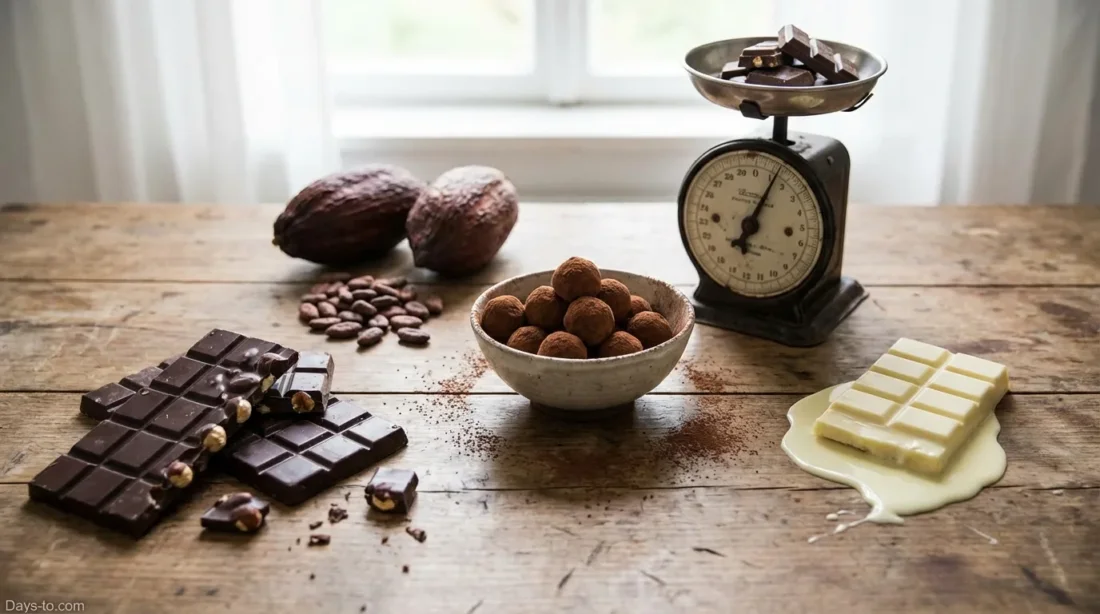
World Chocolate Day
| Year | Day | Date | Days To |
|---|---|---|---|
| 2027 | Wed | July 7, 2027 | 252 days |
| 2028 | Fri | July 7, 2028 | 618 days |
| 2029 | Sat | July 7, 2029 | 983 days |
| 2030 | Sun | July 7, 2030 | 1348 days |
| 2031 | Mon | July 7, 2031 | 1713 days |
| 2032 | Wed | July 7, 2032 | 2079 days |
| 2033 | Thu | July 7, 2033 | 2444 days |
| 2034 | Fri | July 7, 2034 | 2809 days |
| 2035 | Sat | July 7, 2035 | 3174 days |
World Chocolate Day falls on July 7 and marks more than a simple love of sweets. The date is often linked with the moment chocolate became known in Europe, while the story behind the food itself begins much earlier in Mesoamerican cacao culture. That long path matters. It explains why this day is remembered through history, food craft, trade, ritual, taste, and daily pleasure all at once.
Date and Place in the Calendar
| Item | Date | What It Means |
|---|---|---|
| World Chocolate Day | July 7 | The best-known global observance linked to chocolate as a food and cultural symbol. |
| International Chocolate Day | September 13 | A separate chocolate observance used in some calendars and markets. |
| National Chocolate Day | October 28 | A chocolate date seen often in the United States. |
For most readers, the date that matters here is July 7. That is the day most often attached to World Chocolate Day. Other chocolate observances appear elsewhere in the calendar, so the names can blur together. Still, July 7 remains the date most people mean when they search for the history, meaning, and background of World Chocolate Day.
Where the Day Comes From
World Chocolate Day is widely tied to the idea that chocolate entered Europe on July 7, 1550. That explanation appears often when the date is described, even though the observance itself is much newer than the events it remembers. So the day works less like an old public holiday and more like a modern date of remembrance built around a long food history.
That history does not start in Europe. It starts with cacao in Mesoamerica, where cacao beans were valued for drink, ceremony, exchange, and daily use. Early chocolate was not the sweet bar many people picture today. It was usually prepared as a bitter, spiced drink, sometimes frothed, sometimes mixed with other ingredients, and shaped by local taste. Very different from a modern candy bar. Yet clearly chocolate.
When chocolate moved into European use, the form changed. Sugar, cinnamon, and milk later helped shift it toward a sweeter profile. Over time, technology, manufacturing, and changing taste turned chocolate from a prepared drink into tablets, bars, filled pieces, cakes, pastries, spreads, and countless desserts. The day on July 7 carries that whole movement inside it, quietly but clearly.
How Chocolate Changed Over Time
- Mesoamerican cacao use: cacao was prepared mainly as a drink and held social, ceremonial, and food value.
- 16th century Europe: chocolate became known in European courts and upper social circles, first as a drink.
- 1828: cocoa pressing changed texture and production by separating much of the cocoa butter from the ground bean.
- 1847: solid eating chocolate took a modern step forward when cocoa butter, chocolate liquor, and sugar were combined into a bar-like form.
- 1876: milk chocolate moved into clearer form with the addition of dried milk, opening a new chapter in taste and mass popularity.
These turning points matter because World Chocolate Day is not only about liking chocolate. It is about how a food changed shape across centuries. Drink became bar. Ritual met industry. Local ingredient met global appetite. A long journey, and a very visible one.
Early Form
Bitter cacao drinks, spice, foam, ceremony, and local tradition shaped the earliest known chocolate use.
European Shift
Sweetening and refinement moved chocolate toward new textures, new recipes, and wider appeal.
Modern Form
Bars, bonbons, cocoa powder, desserts and everyday treats grew from manufacturing changes in the 19th century.
What World Chocolate Day Celebrates
- A long food history rather than a single invention date.
- Cacao as an ingredient with many uses, from drinking chocolate to molded bars.
- Craft and technique, including roasting, grinding, conching, tempering, and filling.
- Taste range, from dark and bitter to creamy and sweet.
- Shared cultural memory, since chocolate appears in holidays, gifts, desserts, cafés, family kitchens, and daily routines.
That is why World Chocolate Day feels familiar in many places, even when people do not know the full historical background. Chocolate lives in everyday habits. A square after dinner. A birthday cake. A hot drink in cold weather. A small gift. A shelf in almost every store. The date speaks to those ordinary moments as much as it speaks to history.
Types of Chocolate and What Sets Them Apart
| Type | Main Character | Common Use |
|---|---|---|
| Dark Chocolate | Higher cocoa solids, firmer cocoa taste, lower milk content or no milk. | Bars, tasting pieces, baking, ganache, desserts. |
| Milk Chocolate | Smoother, sweeter, milk-based profile. | Snack bars, filled chocolates, coatings, candy. |
| White Chocolate | Made with cocoa butter, sugar, and milk solids, without cocoa solids. | Desserts, coatings, bakery items, decorative work. |
| Unsweetened Chocolate | Pure chocolate liquor with a strong taste. | Baking and recipe building. |
| Drinking Chocolate or Cocoa | Prepared for beverages, sometimes dense and intense, sometimes light and sweet. | Hot chocolate, cold chocolate drinks, café menus. |
On World Chocolate Day, these differences matter because the day is not limited to one style. Some readers look for a dark bar with a sharper cocoa note. Others think first of milk chocolate, truffles, brownies, mousse, or a warm mug of cocoa. Same ingredient family. Very different experiences.
Words on Chocolate Labels
- Cocoa Percentage: usually refers to the share of cocoa solids and cocoa butter in the chocolate. A higher number often signals a stronger cocoa taste.
- Cocoa Butter: the natural fat from the cacao bean. It affects texture, melt, and mouthfeel.
- Single-Origin: chocolate made from cacao traced to one country or one growing area. Flavor notes may feel more focused.
- Chocolate Liquor: despite the name, it contains no alcohol. It is the ground cacao mass used in chocolate making.
- Tempered: chocolate that has been heated and cooled in a controlled way for gloss, snap, and stability.
These label terms often appear around World Chocolate Day because people do not only celebrate taste. They compare texture, finish, aroma, cocoa level, and style. Read the wrapper closely and the piece in your hand makes more sense. Small detail, big difference.
How the Day Is Marked
World Chocolate Day is usually marked in simple, public-facing ways. Shops release limited boxes. Bakeries feature chocolate desserts. Cafés highlight hot cocoa, iced chocolate drinks, or pastry specials. Home cooks lean toward cakes, cookies, mousse, fudge, and brownies. The day does not need a formal ritual. Chocolate already brings its own.
Some celebrations focus on tasting and comparison. Others center on memory. A family recipe. A favorite bar from childhood. A dessert linked with birthdays, holidays, or travel. That emotional pull helps explain why World Chocolate Day stays visible year after year. It is a food date, yes, though it also lives in habit and recollection.
Why the Date Keeps Returning
- Chocolate fits many forms: drink, dessert, candy, baking ingredient, gift.
- It crosses age groups easily: children, adults, casual eaters, dedicated tasters.
- It carries history: cacao tradition, trade, craft, and industrial change all remain part of the story.
- It feels familiar: people already know how it fits into ordinary life.
Other Dates Often Seen Beside It
Readers often notice more than one chocolate date on the calendar and wonder which one is “correct.” The practical answer is simple: July 7 is the best-known date for World Chocolate Day, while other dates reflect local traditions, industry calendars, and separate naming habits. They can exist side by side. No conflict needed.
| Date | Name Commonly Seen | Note |
|---|---|---|
| July 7 | World Chocolate Day | The most familiar global chocolate observance. |
| September 13 | International Chocolate Day | Used in some calendars and commercial references. |
| October 28 | National Chocolate Day | Often listed in the United States. |
So when someone asks, “When is World Chocolate Day?” the clean answer is July 7. When someone asks why that date matters, the fuller answer points back to cacao history, European adoption, and the many forms chocolate took over time. A short answer and a long one. Both work.