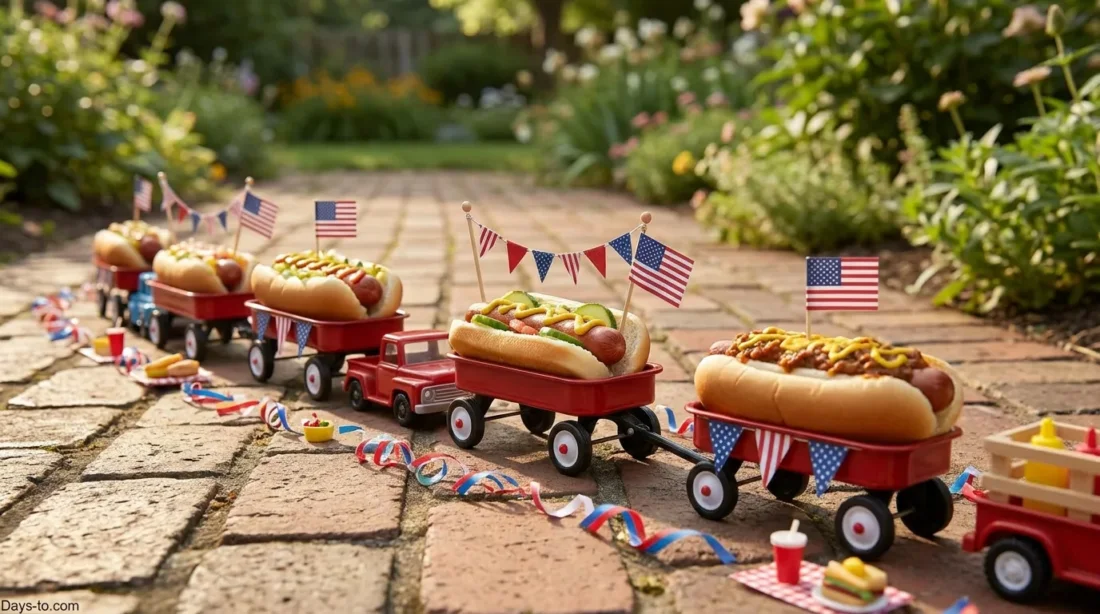
National Hot Dog Day
| Year | Day | Date | Days To |
|---|---|---|---|
| 2027 | Wed | July 21, 2027 | 358 days |
| 2028 | Wed | July 19, 2028 | 722 days |
| 2029 | Wed | July 18, 2029 | 1086 days |
| 2030 | Wed | July 17, 2030 | 1450 days |
| 2031 | Wed | July 16, 2031 | 1814 days |
| 2032 | Wed | July 21, 2032 | 2185 days |
| 2033 | Wed | July 20, 2033 | 2549 days |
| 2034 | Wed | July 19, 2034 | 2913 days |
| 2035 | Wed | July 18, 2035 | 3277 days |
National Hot Dog Day is a food observance built around one of the most familiar items in American casual dining: the hot dog in a soft bun. The day is usually observed in July, during the same summer period when cookouts, baseball games, fairs, and outdoor gatherings make the hot dog feel less like a simple meal and more like a shared seasonal habit.
Main Details About National Hot Dog Day
| Topic | Detail |
|---|---|
| Usual Timing | Observed in July, commonly on the third Wednesday of July. |
| 2026 Date | July 15, 2026, when following the third-Wednesday pattern. |
| Holiday Type | A food observance, not a federal public holiday. |
| Main Theme | Celebrating the hot dog as a summer food, ballpark snack, street-cart item, and cookout favorite. |
| Related Month | July is widely recognized in this food calendar as National Hot Dog Month. |
What National Hot Dog Day Means
National Hot Dog Day gives public attention to a food that became strongly tied to summer eating in the United States. It is simple, portable, and easy to serve at scale. That explains why the hot dog appears in so many public places: stadiums, amusement parks, boardwalks, street stands, school events, fairs, and backyard gatherings.
The day is not about one single recipe. It covers a broad food tradition: steamed franks, grilled dogs, natural-casing sausages, beef hot dogs, turkey dogs, vegetarian versions, regional toppings, soft buns, and small local customs. Some people keep it plain. Others build a full plate around it. Both belong to the same story.
Seen from a history angle, the day works because the hot dog is easy to understand at first glance, yet full of cultural detail when studied closely. The names alone tell part of the journey: frankfurter, wiener, red hot, coney, and simply dog.
When National Hot Dog Day Takes Place
National Hot Dog Day is best understood as a moving July observance. Many calendars link it to the third Wednesday of July. Because that weekday shifts every year, the exact date can change. In 2026, the third Wednesday of July falls on July 15.
Some older online lists show fixed July dates, and this creates confusion. The safer explanation is this: July is the broader hot dog month, while the day itself often follows the third-Wednesday model. So, not all listings match. For readers, that difference matters.
It is also useful to know that National Hot Dog Day is not a government holiday. Stores may run offers, restaurants may post specials, and local groups may hold small events, but the date remains a food-calendar observance, not an official day off.
A Simple Date Note
If a calendar gives a different July date, it may be using an older listing, a local promotion date, or a fixed-date food calendar. The third Wednesday of July is the clearest pattern to mention when explaining the observance in an evergreen article.
Why July Became the Natural Month
July fits National Hot Dog Day because the hot dog belongs naturally to warm-weather eating. It cooks fast, travels well, and works for large groups. A tray of buns and a pot or grill of hot dogs can feed a crowd without much ceremony.
That practical side helped the hot dog become a summer fixture. At ballparks, it could be sold from stands and carried through seating areas. At fairs, it could be eaten while walking. At home, it could move from grill to plate in minutes. Simple, yes. But simple foods often last.
July also sits near the height of outdoor food season in the United States. The holiday does not need a grand ritual. Its identity comes from the ordinary places where people already meet, eat, and pass plates across a table.
The Food Behind the Day
A hot dog usually means a cooked sausage served in a sliced bun. The sausage may be made from beef, pork, turkey, chicken, or a blend, depending on the product and local preference. Many modern versions also include plant-based options for readers who avoid meat.
The bun matters, too. Without it, the food is closer to a sausage plate. With it, the hot dog becomes handheld, neat enough to eat in public, and flexible enough for toppings. That small bread-and-sausage pairing helped the dish move from vendor carts to stadium counters and home grills.
Condiments create much of the personality. Mustard, relish, onions, sauerkraut, chili, cheese, tomato, peppers, and regional sauces all appear in different places. A hot dog can be plain and still be a hot dog. It can also be loaded with color and texture.
Short Timeline of the Hot Dog Story
| Period | What Happened | Why It Matters |
|---|---|---|
| European Sausage Roots | Frankfurter and wiener-style sausages developed from older European sausage traditions. | These names still shape how people describe hot dogs today. |
| 1800s | German-speaking immigrants helped bring sausage-selling habits to American cities. | Urban street food gave the hot dog room to grow. |
| 1871 | Charles Feltman opened a well-known Coney Island hot dog stand. | Coney Island helped connect the hot dog with leisure and public eating. |
| 1890s | Hot dogs became linked with ballparks and large public gatherings. | The food gained a lasting place in American sports culture. |
| 1900s | Regional styles spread through cities and local food stands. | The hot dog became a flexible food rather than one fixed recipe. |
| Today | National Hot Dog Day is observed each July by food fans, restaurants, and local communities. | The day keeps attention on a familiar food with a long public life. |
How the Hot Dog Became a Public Food
The hot dog grew because it solved a simple problem: people wanted hot food that could be eaten while standing, walking, watching a game, or sitting outdoors. It did not need a fork. It did not need a long wait. A vendor could serve it quickly.
That made the hot dog ideal for busy public settings. Boardwalks, fairgrounds, rail stations, city corners, and stadiums all rewarded foods that were fast, warm, and easy to hold. The bun made the sausage practical. The toppings made it memorable.
In this way, National Hot Dog Day is not only about flavor. It is also about the history of public eating: the rise of street vendors, the growth of ballparks, the habit of summer gatherings, and the appeal of a meal that feels casual without feeling empty.
Names That Tell the Story
The word hot dog carries a playful history. Earlier names such as frankfurter and wiener point toward European sausage traditions, while American nicknames grew from street selling, college slang, and public humor. The exact path is debated, which is part of the charm.
Food names often change as people carry them into new cities. A sausage in one place becomes a frank in another. A topped hot dog may become a coney, a red hot, or a local specialty. The dish travels, then changes. Slowly, and in plain sight.
- Frankfurter: a name linked with Frankfurt-style sausage traditions.
- Wiener: a name connected with Vienna, known in German as Wien.
- Coney: often used for hot dogs with chili-style toppings in several American regions.
- Red hot: a traditional nickname used in some cities and food stands.
Regional Styles and Local Identity
National Hot Dog Day also highlights how one food can hold many local identities. A Chicago-style hot dog is not the same as a New York street-cart dog. A chili dog does not feel like a plain mustard dog. A Sonoran-style version tells another story again.
These styles do not compete in any serious way. They show how people adapt a simple form to local taste. Buns, toppings, casing texture, sausage type, and serving style all become part of place. In food history, that detail matters more than slogans.
| Style | Typical Features | Common Association |
|---|---|---|
| Chicago-Style Dog | Mustard, relish, onion, tomato, pickle, sport peppers, celery salt, often on a poppy seed bun. | Chicago food stands and ballpark culture. |
| New York-Style Dog | Often served with mustard, sauerkraut, or onion sauce. | Street carts and city sidewalks. |
| Chili Dog | Hot dog topped with chili, sometimes with cheese or onions. | Diners, drive-ins, and casual counters. |
| Coney Dog | A hot dog with meat sauce, mustard, and onion in many local versions. | Regional restaurants and long-running stands. |
| Sonoran-Style Dog | A bacon-wrapped hot dog with beans, sauces, onions, tomato, and peppers in many versions. | Arizona and northern Mexican food influence. |
Why the Day Still Gets Attention
National Hot Dog Day keeps appearing on calendars because the hot dog has a rare mix of low cost, wide recognition, and strong seasonal feeling. A person does not need special knowledge to understand it. Yet the details reward anyone who looks closer.
Restaurants like the date because it gives them a simple reason to offer specials. Families like it because the food is familiar. Food writers like it because the hot dog carries history, language, regional identity, and public eating habits in one small shape.
There is also nostalgia, but not only nostalgia. The hot dog is still practical. It can be served at a school event, a community picnic, a stadium, a food truck, or a small kitchen table. Few foods move across those settings so easily.
Food Calendar Value
The day gives readers a clear date-based topic with history, culture, and easy recognition. It fits a site focused on dates and events because it explains both when the day happens and why it is remembered.
Cultural Value
The hot dog links city streets, summer meals, local toppings, ballpark counters, and family gatherings. That range gives the observance more depth than a simple food mention.
Hot Dogs and Summer Gatherings
The strongest setting for National Hot Dog Day is the summer gathering. A hot dog table can serve many ages and tastes because the base is simple and the toppings are flexible. Someone may want only mustard. Someone else may stack onions, relish, and chili. The meal adjusts.
That flexibility made the hot dog a practical food for crowds. It can be made in large numbers, held warm, served quickly, and eaten without a formal table setting. For outdoor events, this matters. It always has.
The day also works well for learning because it opens a door to wider topics: immigration history, sausage-making, urban food carts, stadium concessions, regional language, and the growth of casual dining in public places.
How to Read the Holiday Correctly
The most accurate way to describe National Hot Dog Day is as a July food observance with a widely used third-Wednesday date pattern. It is not a formal civic holiday, and it does not require one exact tradition. Its meaning comes from shared recognition.
Because the date can vary by calendar source, readers should treat the July setting as the steady part. The exact weekday may move. Local shops may celebrate on the nearest weekend. Some communities may use the whole month. Nothing strange there.
For an event-history site, the strongest explanation is plain: National Hot Dog Day marks the place of the hot dog in American food culture, especially during summer, while also reflecting older sausage traditions and local food styles.
Small Details Worth Knowing
- It is tied to July: The day sits inside a wider month-long food observance.
- The date can move: The third-Wednesday pattern means the calendar date changes from year to year.
- The origin is layered: European sausage traditions, American street food, and public leisure all shaped the hot dog.
- The toppings tell local stories: A hot dog’s style often reveals where it is being served.
- The day is informal: It is observed through food, promotions, events, and personal traditions, not official ceremonies.
Common Questions About National Hot Dog Day
Is National Hot Dog Day Always on the Same Date?
No. It is often observed on the third Wednesday of July, so the calendar date can shift each year. Some lists may show other July dates because local promotions and older food calendars do not always match.
Is National Hot Dog Day an Official Public Holiday?
No. It is a food observance, not a federal public holiday. Schools, banks, and public offices do not close for it as a standard rule.
Why Is National Hot Dog Day in July?
July matches the hot dog’s strongest seasonal setting: cookouts, outdoor events, fairs, and ballpark meals. The wider month is also commonly treated as National Hot Dog Month.
Where Did the Hot Dog Come From?
The hot dog has older European sausage roots, especially connected with frankfurter and wiener traditions. In the United States, immigrant food culture, street vendors, Coney Island, and ballparks helped shape the familiar bun-served version.
Why Are There So Many Hot Dog Styles?
The base food is simple, so local toppings can change it easily. Cities and regions added their own sauces, relishes, peppers, onions, chili, buns, and serving habits. That is why one hot dog can look very different from another.