Wimbledon
| Year | Day | Date | Days To |
|---|---|---|---|
| 2026 | Mon | June 29, 2026 | 81 days |
Wimbledon, formally known as The Championships, holds a rare place in sport. It is the oldest tennis tournament, it is still played on grass courts, and it returns each summer to the All England Lawn Tennis and Croquet Club in London. For 2026, the main tournament is set for 29 June to 12 July. Dates matter here, yes, but so do the details around them: the surface, the white clothing, the formal titles, and the habits that have stayed in place for well over a century.
Wimbledon Dates and Milestones
| Year | What Changed |
|---|---|
| 1868 | The club was founded as the All England Croquet Club. |
| 1877 | The first Wimbledon Championships were held. |
| 1884 | Ladies’ Singles entered the programme. |
| 1922 | The tournament moved to Church Road, its present home. |
| 1968 | Wimbledon entered the Open Era. |
| 2007 | Equal prize money began for men and women. |
| 2009 | The Centre Court roof came into use. |
| 2019 | The No.1 Court roof joined it. |
| 2026 | The Championships are scheduled for 29 June to 12 July. |
Where Wimbledon Began
The story starts before tennis took over the grounds. The club itself began in 1868, first as a croquet club, and lawn tennis arrived soon after. In 1877, the first Championships were staged, giving the sport a fixed point on the calendar and a name that has lasted. Then, in 1884, Wimbledon added the Ladies’ Singles. That date matters more than it first seems. It marked the moment Wimbledon stopped being a narrower contest and became a fuller championship meeting.
Another turning point arrived in 1922, when the tournament moved from Worple Road to Church Road. That move gave Wimbledon the setting most people now picture: Centre Court, the club grounds, and the physical layout that shaped its modern identity. Later came 1968, when the Open Era began and professionals could compete. Much later still, but no less memorable, came 2007, when equal prize money was introduced for men and women. A long history, yes. Yet it has never stood still.
What Makes Wimbledon Feel Different
Grass Above All
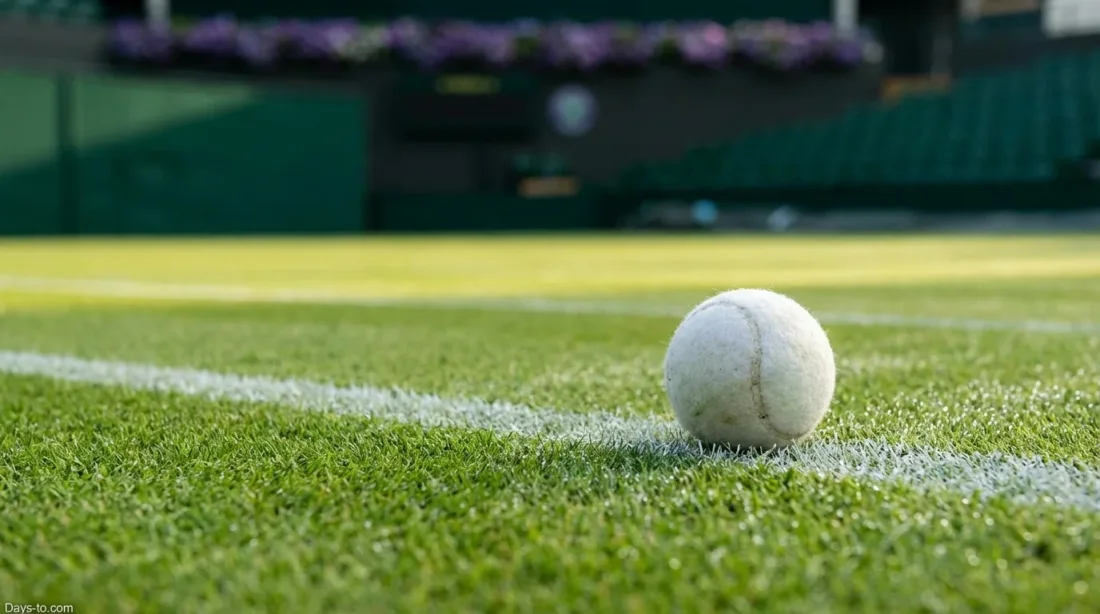
Wimbledon is the only Grand Slam tournament still played on grass. That one detail changes almost everything. The bounce stays lower, points can move faster, and clean timing matters from the first strike. Players who settle quickly on grass often look calm; players who do not, do not. Simple as that.
White Clothing and Formal Language
Wimbledon still protects its all-white clothing rule with unusual care. Players are expected to appear in almost entirely white, with only very limited colour trim allowed. Even the event’s language sounds distinct: Gentlemen’s Singles and Ladies’ Singles, not the simpler labels used elsewhere. Old-fashioned? In tone, perhaps. In effect, it keeps Wimbledon instantly recognizable.
The atmosphere beyond the courts matters too. The Queue remains part of Wimbledon culture, giving people a same-day path to tickets, and The Hill has become one of the tournament’s best-known public spaces for watching matches on the big screen. Then there is the food most closely tied to the event: strawberries and cream. On average, around 200,000 portions are enjoyed during the Championships. A small detail on paper. Very Wimbledon in practice.
Courts, Roofs, and the Way Grass Plays
Rain has always shaped British summer sport, so Wimbledon adapted without giving up its habits. The Centre Court roof arrived in 2009, and the No.1 Court roof followed in 2019. Those additions made scheduling steadier while keeping the tournament on grass and in its usual place on the calendar. Modern engineering, yes, though the feeling remains very much traditional.
Grass itself needs close care. Wimbledon’s courts are prepared with a level of attention that players notice immediately, especially on serve, return, and movement near the baseline. Centre Court carries the weight of history, yet the wider grounds matter as well: outer courts, practice areas, and the slower wear that changes how the fortnight looks from day one to finals weekend. By the closing rounds, the court has a different face. Brown patches appear. Footwork gets tested. The tournament shows its age in the best way—through use.
Trophies, Titles, and Formal Names
| Title | Detail |
|---|---|
| Gentlemen’s Singles Trophy | The men’s champion receives a silver-gilt cup. |
| Ladies’ Singles Trophy | The women’s champion receives the Rosewater Dish, a silver salver first presented in the 1880s. |
| Official Event Name | Wimbledon’s formal title remains The Championships. |
These formal names are not decoration. They are part of how Wimbledon presents itself to the public and to the sport. The trophies, the court names, the schedule language, the white clothing rule—all of them pull in the same direction. Wimbledon keeps its own vocabulary. And by doing that, it protects a tone that people recognize long before the first serve is struck.
How the Fortnight Unfolds
- The Championships now run across 14 days, not the older shorter pattern.
- The opening two days begin with Gentlemen’s and Ladies’ Singles first-round play.
- As the days move on, the grounds carry singles, doubles, mixed doubles, junior, and wheelchair events.
- The final weekend draws attention back to the main singles titles, with the biggest crowds focused on the show courts.
That structure helps explain why Wimbledon feels both ordered and busy. The tournament is not built around one match per day and little else. It spreads across the grounds, across age groups, and across different formats, while still keeping Centre Court at the symbolic middle. Formal around the edges, lively inside it. That balance is part of the draw.
Wimbledon in the Tennis Calendar
Wimbledon sits in a very clear slot on the tennis calendar: late June into early July, when the grass season reaches its peak. For 2026, the main draw is scheduled from Monday 29 June to Sunday 12 July. That timing gives Wimbledon a rhythm of its own. Clay season has ended, hard courts come later, and for two weeks the sport belongs to grass-court tennis, white clothing, clipped lawns, and names that carry far beyond London.
Say Wimbledon, and most people picture more than matches. They picture Centre Court, the All England Club, the Rosewater Dish, the Queue, the Hill, and a tournament that still treats its past as something living. Old, yes. Distant, no. Every summer, it returns to the calendar with the same name, the same surface, and the same unmistakable sense of place.