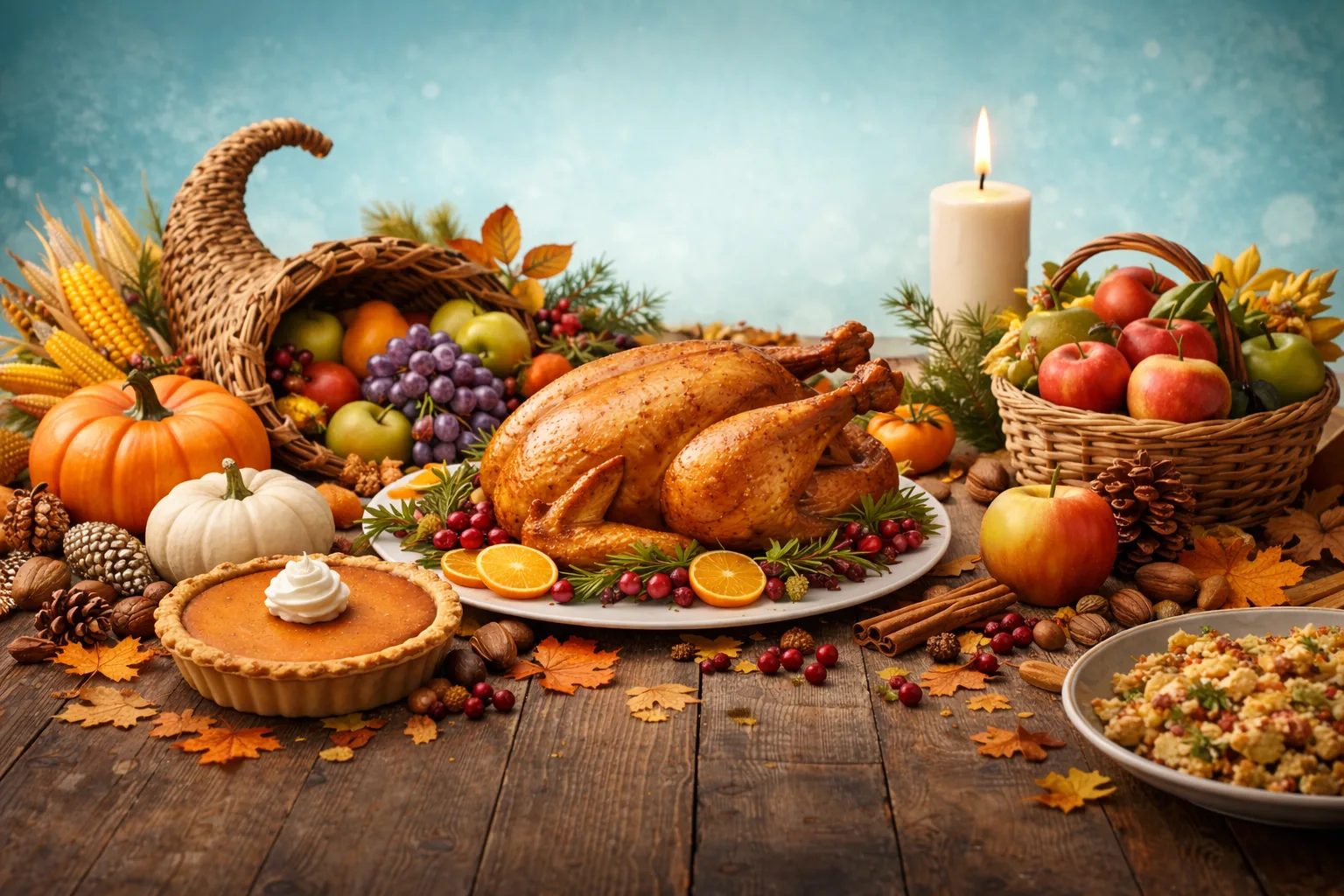
Thanksgiving
| Year | Day | Date | Days To |
|---|---|---|---|
| 2026 | Thu | November 26, 2026 | 231 days |
| 2027 | Thu | November 25, 2027 | 595 days |
| 2028 | Thu | November 23, 2028 | 959 days |
| 2029 | Thu | November 22, 2029 | 1323 days |
| 2030 | Thu | November 28, 2030 | 1694 days |
| 2031 | Thu | November 27, 2031 | 2058 days |
| 2032 | Thu | November 25, 2032 | 2422 days |
| 2033 | Thu | November 24, 2033 | 2786 days |
| 2034 | Thu | November 23, 2034 | 3150 days |
| 2035 | Thu | November 22, 2035 | 3514 days |
Thanksgiving is a holiday built around gratitude, a shared meal, and time set aside for connection. Many people mark it with food, warm conversation, and small rituals that feel steady year after year. At its heart, it is a harvest-season idea: pause, notice what went well, and gather with the people who matter.
United States Date
Fourth Thursday in November. A federal holiday with a strong focus on family time and community meals.
Canada Date
Second Monday in October. Often tied to autumn rhythms, seasonal foods, and simple gatherings.
Key Moments In The Holiday’s Story
| Year | What Happened | Why It Matters |
|---|---|---|
| 1621 | Harvest celebration in Plymouth with shared food | Often cited as an early reference point for gathering and thanks |
| 1789 | National day of thanks is officially recommended | Moves the idea toward a public tradition beyond local events |
| 1863 | A late-November observance is named at the national level | Helps normalize a recurring annual calendar moment |
| 1941 | Date is set as the fourth Thursday in November (U.S.) | Creates long-term consistency for schools, work, and travel |
Origins and Early Gatherings
Long before modern calendars and fixed dates, communities held harvest feasts to mark plenty after a season of work. The 1621 gathering in Plymouth is frequently discussed because it reflects a recognizable pattern: food, company, and a public pause to express gratitude. It was not the same as today’s holiday schedule, yet the core idea feels familiar.
How The Date Became Official
Thanksgiving did not become a stable annual observance overnight. It developed through repeated use, local customs, and later standardization. Over time, routine turned into tradition, and tradition needed a reliable place on the calendar. That’s why today’s fixed timing matters for planning, travel, and keeping family expectations clear.
- Early practice: days of thanks were often declared for local communities, tied to harvest and good news.
- National recognition: formal proclamations helped spread a shared reference for when to observe the holiday.
- Long-term standard: setting a consistent date reduced confusion and made planning much easier for familes traveling toghether.
Traditions People Recognize Today
Modern Thanksgiving is known for signature foods, but the deeper theme is attention: noticing people, opportunities, and ordinary comforts. Many households start with a brief gratitude moment, then settle into a meal that prioritizes togetherness over perfection.
- Shared meal featuring roast dishes, seasonal sides, and simple desserts that feel classic.
- Community events like parades, friendly games, and volunteering at local kitchens.
- Family stories—old photos, recipes, and small rituals repeated every year.
Hosting Ideas That Reduce Stress
- Pick one “star” dish and keep the rest easy; a focused plan feels calm.
- Ask guests early about allergies and preferences; it supports comfort and inclusion.
- Build in leftovers on purpose; it adds value and makes the next day lighter.