Rosh Hashanah
| Year | Day | Date | Days To |
|---|---|---|---|
| 2026 | Sat | September 12, 2026 | 152 days |
| 2027 | Sat | October 2, 2027 | 537 days |
| 2028 | Thu | September 21, 2028 | 892 days |
| 2029 | Mon | September 10, 2029 | 1246 days |
| 2030 | Sat | September 28, 2030 | 1629 days |
| 2031 | Thu | September 18, 2031 | 1984 days |
| 2032 | Mon | September 6, 2032 | 2338 days |
| 2033 | Sat | September 24, 2033 | 2721 days |
| 2034 | Thu | September 14, 2034 | 3076 days |
| 2035 | Thu | October 4, 2035 | 3461 days |
The arrival of the Jewish New Year, known widely as Rosh Hashanah, marks a profound shift in the spiritual calendar. Unlike secular new year celebrations that focus on parties, this sacred time is dedicated to introspection and the recognition of God as King. It takes place on the first two days of Tishrei, which is the seventh month of the Hebrew calendar. This period initiates a ten-day cycle of repentance that culminates in Yom Kippur. It is a time when tradition holds that the Book of Life is opened, and the fate of every living being is recorded for the coming year.
The Head of the Year
The literal translation of Rosh Hashanah is “Head of the Year.” Just as the head controls the body, the actions and mindset adopted during these initial days are believed to influence the entire year ahead. In the Torah, this festival is referred to differently, often called Yom Teruah, which translates to the Day of Sounding the Shofar. It is widely considered the anniversary of the creation of Adam and Eve, marking the birthday of humanity itself rather than the physical creation of the universe.
The Call of the Shofar
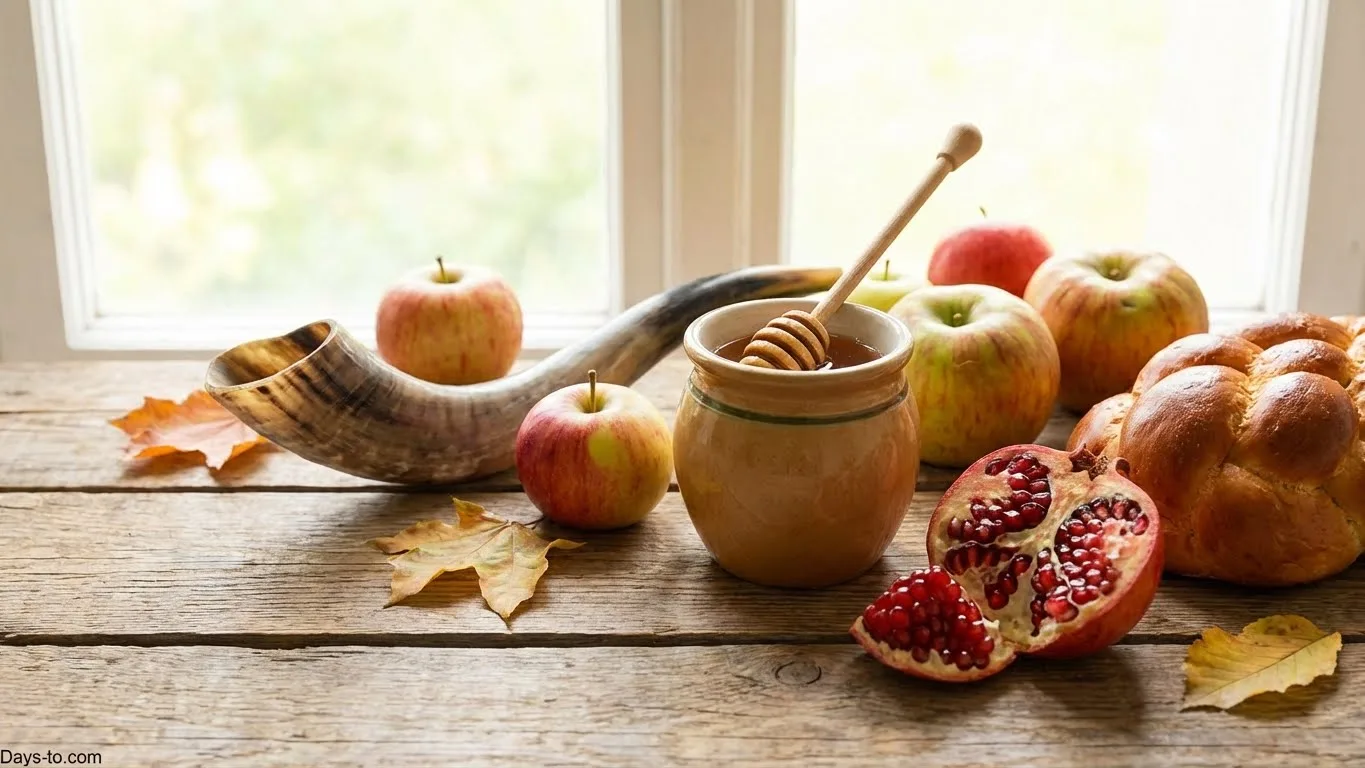
Central to the observance is the blowing of the shofar, a trumpet made from a ram’s horn. This ancient instrument produces distinct sounds that serve as a spiritual alarm clock, waking the soul from complacency. The mitzvah, or commandment, is specifically to hear the shofar, not just to blow it. There are different types of blasts used during the service, ranging from a long, steady sound to short, staccato bursts resembling sobbing or crying.
A total of 100 blasts are typically sounded during the synagogue service. This primal sound connects the listener to history, recalling the Binding of Isaac on Mount Moriah. It bypasses the intellect and speaks directly to the heart, urging a return to essential values. The horn must be natural and curved, representing a humble heart bent in submission to the divine will.
Symbolic Foods and Meaning
The festive meals during this holiday are rich with symbolism. We eat specific foods to express our hopes for a sweet and successful year. This practice, known as the Yehi Ratzon, involves reciting a short prayer before consuming the food. While customs vary by region, the Ashkenazi and Sephardic traditions both emphasize sweetness and abundance on this special occassion.
| Symbolic Food | Associated Meaning |
|---|---|
| Apples and Honey | The most iconic pairing, representing the wish for a sweet new year. |
| Round Challah | Unlike the braided loaves eaten on Sabbath, these are round to symbolize the eternal cycle of life and the crown of God. |
| Pomegranate | Eaten with the hope that our merits will be as numerous as the seeds of the fruit. |
| Fish Head | Represents the desire to be at the “head” (leaders) and not the “tail” (followers). |
The Tradition of Tashlich
On the afternoon of the first day, many people participate in a ceremony called Tashlich. They walk to a flowing body of water, such as a river, sea, or spring, to symbolically cast away their sins. Verses from the prophet Micah are recited: “And You shall cast their sins into the depths of the sea.” While bread is often thrown into the water, the core of the ritual is the internal resolve to improve one’s behavior. This act serves as a physical manifestation of a spiritual desire to leave behind negative habits.
The Days of Awe
Rosh Hashanah is not an isolated event but the gateway to the Ten Days of Repentance. The time between the New Year and Yom Kippur is viewed as a critical window of opportunity. It is believed that while the righteous are inscribed in the Book of Life immediately, others have these ten days to influence the final decree through teshuvah (repentance), tefillah (prayer), and tzedakah (charity). The greeting changes during this time to “G’mar Chatima Tova,” wishing that the other person be sealed for a good year.
The holiday liturgy includes the poem Unetanneh Tokef, which dramatically describes the day as a moment when all distinct creatures pass before the Creator like a flock of sheep.