Passover
| Year | Day | Date | Days To |
|---|---|---|---|
| 2027 | Thu | April 22, 2027 | 378 days |
| 2028 | Tue | April 11, 2028 | 733 days |
| 2029 | Sat | March 31, 2029 | 1087 days |
| 2030 | Thu | April 18, 2030 | 1470 days |
| 2031 | Tue | April 8, 2031 | 1825 days |
| 2032 | Sat | March 27, 2032 | 2179 days |
| 2033 | Thu | April 14, 2033 | 2562 days |
| 2034 | Tue | April 4, 2034 | 2917 days |
| 2035 | Tue | April 24, 2035 | 3302 days |
Passover, known natively as Pesach, stands as one of the most widely observed holidays in the Jewish tradition. It marks the liberation of the Israelites from slavery in ancient Egypt. This major festival typically falls in early spring, specifically on the 15th day of Nisan in the Hebrew calendar. The observance serves not just as a historical memory but as a celebration of freedom that resonates through centuries. Families gather to retell the story of the Exodus, ensuring that the narrative of resilience and hope passes to the next generation.
The Historical Narrative of Exodus
The central theme of this holiday revolves around the Exodus from Egypt. According to biblical accounts, the Jewish people served as slaves under the rule of the Pharaohs. After many years of hardship, the prophet Moses approached the Pharaoh to demand the release of his people. When the ruler refused, ten plagues were sent to afflict the land. The final plague, which involved the death of the firstborn, passed over the homes of the Israelites. This specific event gives the holiday its English name, Passover. Following this, the Pharaoh finally agreed to grant their freedom, allowing them to leave hurriedly.
Because they left in such a rush, their bread dough did not have time to rise. This historical detail explains the primary dietary restriction of the holiday: the prohibition of chametz (leavened grain) and the consumption of matzah. The journey from slavery to nationhood forms the spiritual core of the festival. It emphasizes the transition from oppression to independence.
The Seder Rituals and Customs
The focal point of the celebration is the Seder, a ritual feast held on the first two nights of the holiday. The word Seder translates to “order,” referring to the specific sequence of actions and prayers performed during the meal. Participants read from a text called the Haggadah, which narrates the story of the Exodus in great detail. The night involves drinking four cups of wine, eating matzah, and partaking in symbolic foods placed on the Seder Plate. Children play a vital role, often asking the Four Questions (Ma Nishtana) to understand why this night differs from all other nights.
| Seder Plate Item | Meaning and Symbolism |
|---|---|
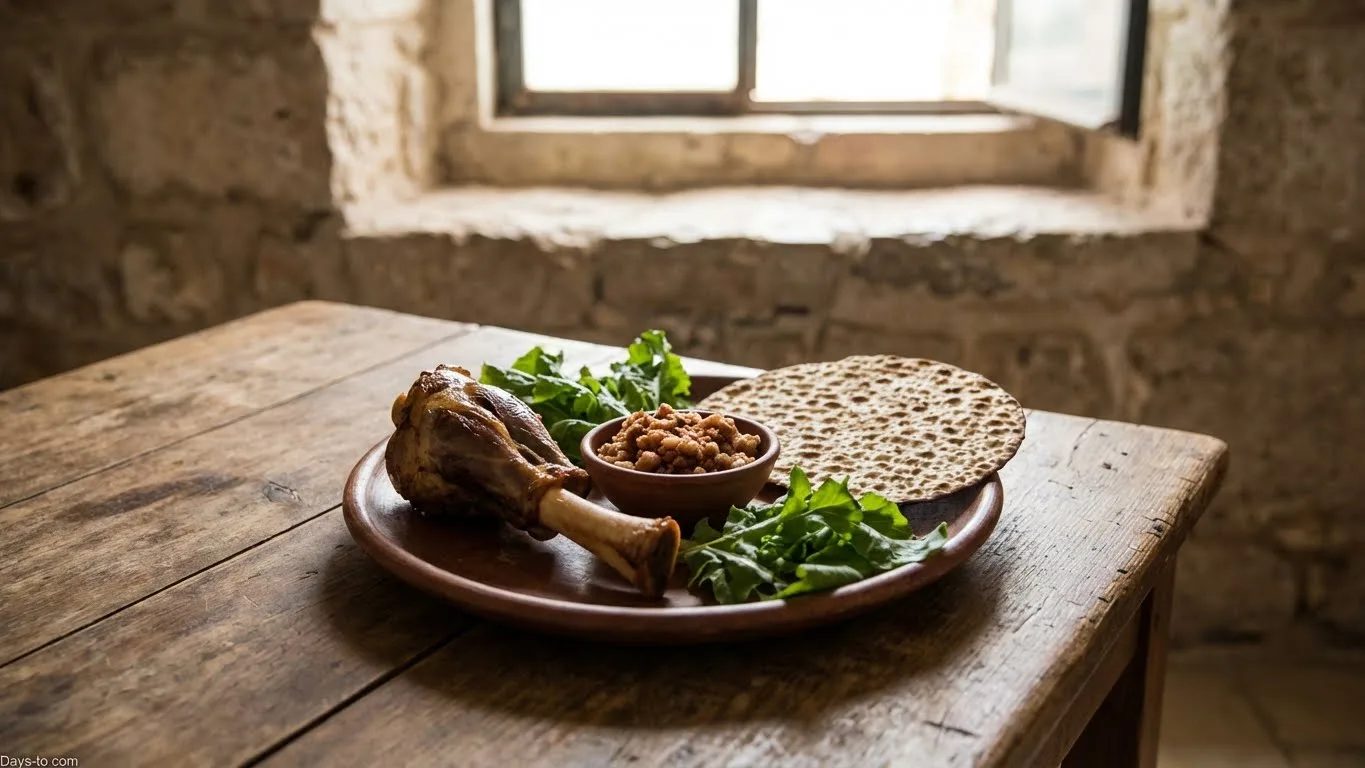
| Maror (Bitter Herbs) | Represents the bitterness of slavery and the harsh conditions endured in Egypt. |
| Charoset | A sweet paste of fruit and nuts symbolizing the mortar used by slaves to build pyramids. |
| Karpas (Vegetable) | Usually parsley dipped in saltwater to represent the tears shed by the Israelites. |
| Z’roa (Shank Bone) | Symbolizes the ancient Paschal lamb offering in the Temple. |
| Beitzah (Egg) | Represents the cycle of life and the festival sacrifice offered in Jerusalem. |
Matzah and Dietary Laws
For the entire duration of the holiday, usually seven or eight days, observers abstain from eating anything containing leaven. This includes bread, pasta, cookies, and beer. The central food item becomes Matzah, a flat, cracker-like bread made only from flour and water. It is often called the “Bread of Affliction” as well as the bread of freedom. The strict rules regarding food require a thorough cleaning of the home before the holiday begins. This process, known as bedikat chametz, ensures no crumbs of leavened food remain.
Matzah serves as a physical reminder of humility and the haste with which freedom was seized.
Modern Observance
Today, the holiday connects Jewish communities worldwide through shared customs. While the core requirements remain the same, culinary traditions vary significantly between Ashkenazi (Eastern European) and Sephardic (Spanish/Middle Eastern) Jews. For instance, Sephardic tradition often allows the consumption of kitniyot (legumes and rice) during the week, while Ashkenazi custom traditionally forbids it. Regardless of these differences, the emphasis remains on family unity and the transmission of history.
The themes of the festival extend beyond religious boundaries for many. The concept of breaking free from constraints holds universal importance. It encourages individuals to examine their own lives and identify what holds them back. The Seder meal fosters dialogue and questioning, making it an intellectual experience as well as a culinary one. By retelling the past, participants aim to appreciate their current freedom and hope for a future where everyone lives in peace.