Palm Sunday
| Year | Day | Date | Days To |
|---|---|---|---|
| 2027 | Sun | March 21, 2027 | 342 days |
| 2028 | Sun | April 9, 2028 | 727 days |
| 2029 | Sun | March 25, 2029 | 1077 days |
| 2030 | Sun | April 14, 2030 | 1462 days |
| 2031 | Sun | April 6, 2031 | 1819 days |
| 2032 | Sun | March 21, 2032 | 2169 days |
| 2033 | Sun | April 10, 2033 | 2554 days |
| 2034 | Sun | April 2, 2034 | 2911 days |
| 2035 | Sun | March 18, 2035 | 3261 days |
Palm Sunday marks the beginning of the most sacred period in the Christian calendar, known widely as Holy Week. It always falls on the Sunday immediately preceding Easter. This day commemorates a specific historical event described in the four canonical Gospels: the triumphal entry of Jesus into Jerusalem. For millions of observers around the world, this date signals a shift in focus from the introspection of Lent toward the dramatic events leading to the crucifixion and resurrection. While the mood is initially celebratory, it carries an underlying tone of the solemnity that follows in the days ahead.
The Historical Context of the Entry
The narrative found in the Bible describes a scene of immense public enthusiasm. As Jesus approached Jerusalem, he descended from the Mount of Olives. Unlike military conquerors of the time who would ride warhorses to display power, the accounts state he rode a young donkey. This choice was deliberate and fulfilled the prophecy of Zechariah, emphasizing peace rather than aggression. Crowds gathered to welcome him, laying down their cloaks and cutting leafy branches from the trees to spread on the road.
People shouted the word “Hosanna,” which is a plea meaning “save us.” Over time, this phrase evolved into an exclamation of praise. This event took place during the Jewish festival of Passover, meaning the city was already filled with pilgrims. The entry into Jerusalem set the stage for the conflicts with religious authorities that would unfold later in the week.
Symbolism of the Palm Branch
In the ancient Near East and Greco-Roman world, the palm branch was a recognizable standard of victory and triumph. By waving these branches, the crowd effectively accorded royal status to the rider. However, the meaning within the religious context shifts slightly to represent a spiritual victory over death rather than a political victory over Rome.
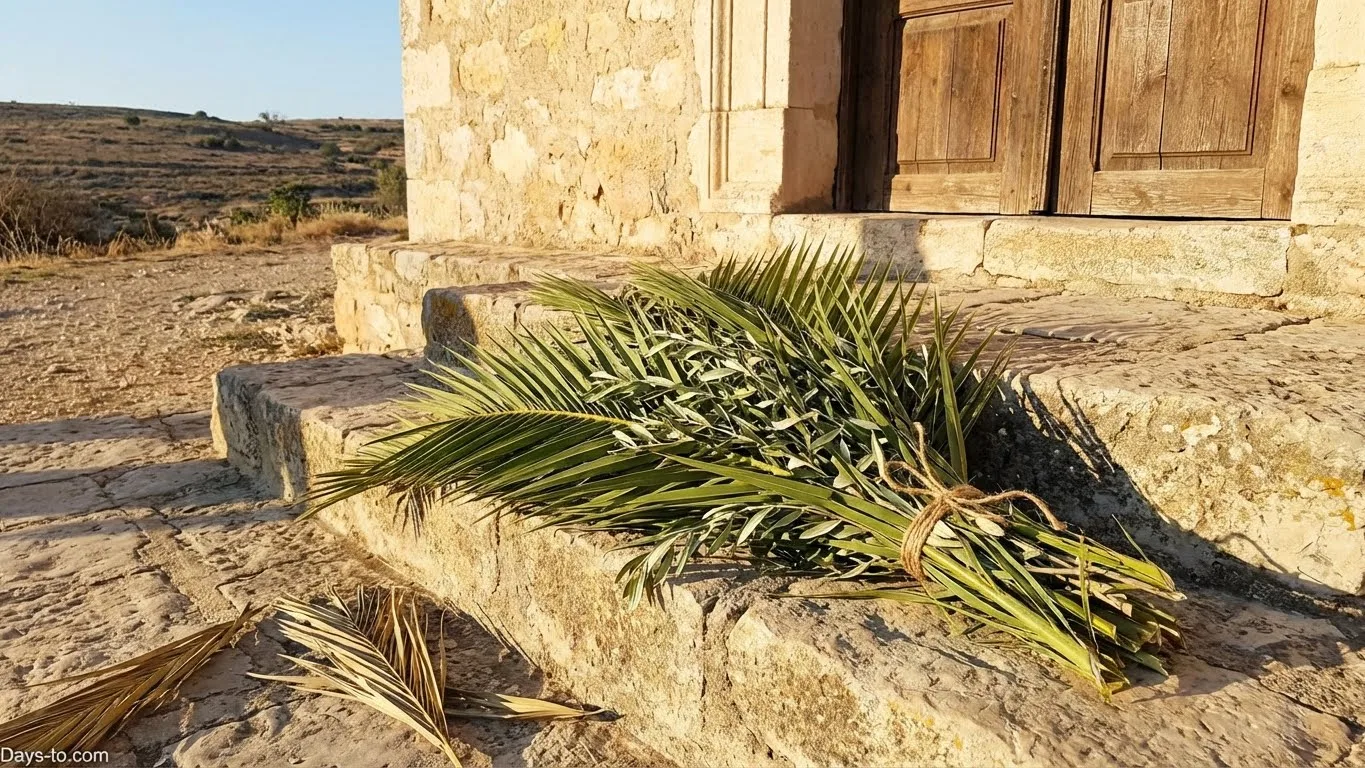
Today, these branches serve a dual purpose in liturgy. They are blessed and distributed to the congregation during the service. Many believers keep these items in their homes throughout the year. They serve as a physical reminder of the entrance of faith into their lives. In some traditions, the branches are woven into the shape of a small cross.
Relationship With Ash Wednesday
There is a cyclical nature to the use of these palms. The branches distributed during the current year’s service are often collected back by the church before the next Lenten season begins. These dried palms are then burned to create the ashes used on Ash Wednesday the following year. This practice connects the end of one liturgical year’s story to the beginning of the next, symbolizing mortality and penance.
| Feature | Western Christianity | Eastern Orthodoxy |
|---|---|---|
| Date Calculation | Sunday before Western Easter (Gregorian) | Sunday before Eastern Pascha (Julian) |
| Primary Symbol | Palm Fronds (or native branches) | Bay leaves or Pussy Willows |
| Liturgical Color | Red or Purple | Green |
| Alternative Name | Passion Sunday | Entrance of the Lord |
Regional Variations in Flora
Not every climate supports the growth of palm trees. Because of this geographic reality, the day is celebrated with different plants depending on the location. In countries like Poland, Lithuania, and Russia, where palms are scarce, believers use pussy willows. These trees are among the first to bud in spring, symbolizing new life.
In parts of Southern Europe, olive branches are frequently used alongside or instead of palms. These serve as a symbol of peace. The core signifcance of the event remains the same, regardless of the vegetation used. The focus is on the act of waving branches to honor the arrival of the Messiah.
The Reading of the Passion
A distinctive element of the service on this day is the reading of the Passion Narrative. This scripture passage recounts the events of the Last Supper, the betrayal by Judas, the trial, and the crucifixion. Unlike typical Sunday readings which are short, this is a lengthy text often read by multiple voices representing different characters.
The juxtaposition is stark. The service begins with joyous songs of “Hosanna” and waving branches, but it ends with the somber account of death. This structure is designed to prepare the congregation for the solemn days of Triduum (Maundy Thursday, Good Friday, and Holy Saturday). It forces the observer to acknowledge that the crowd who cheered on Sunday was the same crowd that demanded execution on Friday.