New Years Eve
| Year | Day | Date | Days To |
|---|---|---|---|
| 2026 | Thu | December 31, 2026 | 262 days |
| 2027 | Fri | December 31, 2027 | 627 days |
| 2028 | Sun | December 31, 2028 | 993 days |
| 2029 | Mon | December 31, 2029 | 1358 days |
| 2030 | Tue | December 31, 2030 | 1723 days |
| 2031 | Wed | December 31, 2031 | 2088 days |
| 2032 | Fri | December 31, 2032 | 2454 days |
| 2033 | Sat | December 31, 2033 | 2819 days |
| 2034 | Sun | December 31, 2034 | 3184 days |
| 2035 | Mon | December 31, 2035 | 3549 days |
The final day of the Gregorian year, December 31st, serves as a global marker of transition. Known widely as New Year’s Eve, this date is not merely a pause between calendars but a distinct cultural event steeped in historical significance. While modern observers often associate the night with fireworks and countdowns, the roots of this annual passage go back millennia. It represents a psychological threshold where the past meets the future, creating a unique space for reflection across virtually every society on Earth.
Historical Origins of the Date
The selection of this specific date is not an astronomical accident. It derives directly from the Roman calendar reforms initiated by Julius Caesar. Before 46 B.C., the Roman year was a chaotic system that often drifted out of sync with the seasons. Caesar introduced the Julian calendar, permanently establishing January 1st as the start of the year. This decision honored Janus, the Roman god of beginnings, gates, and transitions.
Janus is depicted with two faces: one looking backward into the old year and one looking forward into the new. This ancient symbolism persists today. When we count down the seconds, we are reenacting a Roman ritual of acknowledging time’s duality. It is a moment where reflection and anticipation occur simultaneously.
| Time Period | Celebration Timing | Primary Focus |
|---|---|---|
| Ancient Babylon | Mid-March (Akitu) | Crop planting and crowning kings |
| Roman Empire | January 1st (Kalends) | Honoring Janus and administrative shifts |
| Medieval Europe | Varied (Christmas or Easter) | Religious observance |
| Modern Era | December 31st | Social gathering and secular timekeeping |
Global Time Zones and the First Celebrants
Because of the Earth’s rotation and the International Date Line, New Year’s Eve is an event that travels across the globe over a 26-hour period. It does not happen all at once. The first places to welcome the new year are the Pacific island nations. Kiribati, specifically the Line Islands, is technically the first inhabited region to enter the new year. This geographical quirk makes the occurence of midnight a moving target rather than a static moment.
Conversely, the last territories to leave the old year behind are usually unihabited islands like Baker Island and Howland Island. This staggered progression means that while someone in Sydney, Australia is waking up on January 1st, people in New York are still preparing for their evening festivities. This creates a rolling celebration that connects humanity through a shared adherence to the clock.
Specific Cultural Observances
Traditions on this night vary wildly depending on local folklore and history. In Spain and some Latin American countries, a specific ritual involves grapes. Known as Las Doce Uvas de la Suerte, people eat twelve grapes—one for each stroke of the clock at midnight. Each grape represents good luck for one month of the coming year. It is a race against the bell, blending superstition with festivity.
In Scotland, the celebration is called Hogmanay. It historically overshadowed Christmas and involves a custom called “first-footing.” The first person to cross the threshold of a home after midnight brings gifts like coal or shortbread. This visitor is believed to determine the household’s luck for the rest of the year. Dark-haired males are traditionally considered the most auspicious guests in this context.
The Significance of Noise and Light
Almost every New Year’s Eve celebration involves loud noises, whether through fireworks, bells, or cheering. This is not just for entertainment. Ancient superstitions held that loud noises dispelled evil spirits and chased away the bad luck of the previous year. The modern firework displays in cities like London, Dubai, and Sydney are evolved versions of these early protective rituals.
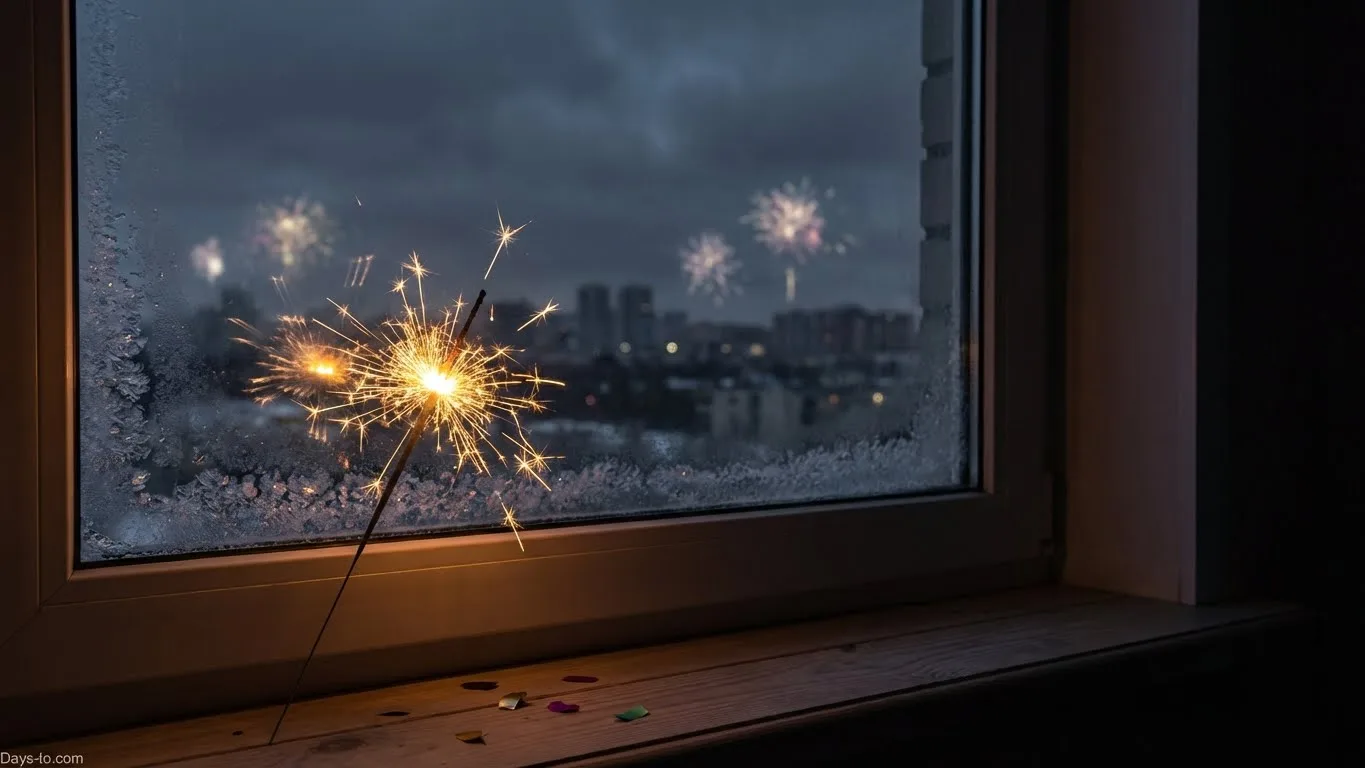
The visual spectacle of light against the dark winter sky symbolizes the triumph of hope over darkness, a theme central to the human experience of time.
The “Ball Drop” in New York City’s Times Square adds a technological layer to this. Started in 1907, the descent of the ball was originally inspired by maritime time balls used to help sailors adjust their chronometers. Today, it serves as a visual synchronization point for millions, marking the precise termination of the calendar year.
Resolutions and the Babylonians
The practice of making resolutions is often assumed to be a modern self-help invention, but it is actually ancient. The Babylonians are recorded as the first people to make New Year’s resolutions around 4,000 years ago. Their promises were usually concrete and external, such as returning borrowed farm equipment or paying off debts to gods.
In contrast, modern resolutions tend to be internal, focusing on self-improvement or health. Regardless of the intent, the core psychological function remains the same: the belief that a temporal boundary allows for a fresh start. It is an opportunity to reset behavioral patterns under the guise of a new calendar cycle.