Mid Autumn Festival
| Year | Day | Date | Days To |
|---|---|---|---|
| 2026 | Fri | September 25, 2026 | 166 days |
| 2027 | Wed | September 15, 2027 | 521 days |
| 2028 | Tue | October 3, 2028 | 905 days |
| 2029 | Sat | September 22, 2029 | 1259 days |
| 2030 | Thu | September 12, 2030 | 1614 days |
| 2031 | Wed | October 1, 2031 | 1998 days |
| 2032 | Mon | September 20, 2032 | 2353 days |
| 2033 | Thu | September 8, 2033 | 2706 days |
| 2034 | Wed | September 27, 2034 | 3090 days |
| 2035 | Mon | September 17, 2035 | 3445 days |
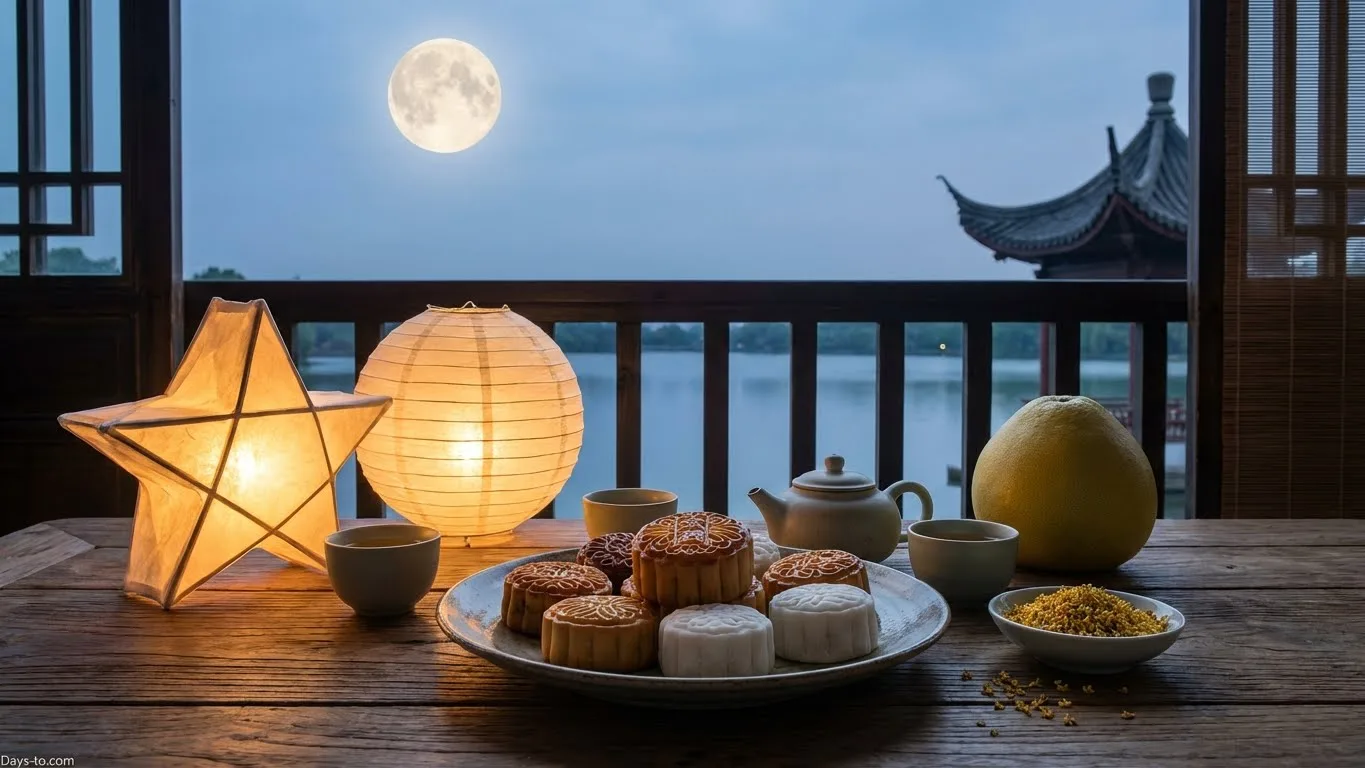
The 15th day of the 8th lunar month marks one of the most important dates in Asian culture. The Mid-Autumn Festival, also widely known as the Moon Festival, celebrates the harvest and the full moon. Ancient emperors worshiped the moon to ensure a plentiful yield the following year. Today, this event is synonymous with family reunions and gratitude. While the date changes annually on the Gregorian calendar, the focus remains on unity. The round shape of the moon symbolizes harmony and completeness in Chinese philosophy.
The Legend of Chang’e and the Jade Rabbit
Mythology plays a central role in how this festival is understood. The most famous story involves Chang’e, the Moon Goddess. According to folklore, her husband, Hou Yi, was a skilled archer who shot down nine scorching suns to save the earth. He was rewarded with an elixir of immortality. To protect the elixir from a thief, Chang’e drank it herself and floated up to the moon. She resides there with the Jade Rabbit, who is said to pound medicine or rice cakes endlessly. People look at the bright moon and search for the silhouette of the rabbit or the goddess.
Mooncakes: The Taste of Tradition
No celebration is complete without the mooncake. These dense pastries are traditionally filled with lotus seed paste or sweet bean paste. A whole salted egg yolk often sits in the center, representing the full moon. Sharing a mooncake signifies the completeness of the family unit. In recent years, variations have expanded to include ice cream, fruit, and even savory meat fillings. The crust usually features imprinted characters related to longevity or harmony. Gifting these pastries is a vital gesture of respect and friendship during the season.
| Feature | Chinese Tradition | Vietnamese Tradition |
|---|---|---|
| Primary Focus | Family Reunion & Worship | Children & Education |
| Key Activity | Gazing at the Moon | Lantern Processions |
| Typical Food | Mooncakes, Crabs, Tea | Mooncakes, Pomelo, Fruit Trays |
| Symbolism | Harmony and Harvest | Success in Learning |
Vietnamese Perspective: A Festival for Children
In Vietnam, the festival is known as Tết Trung Thu. While it shares roots with Chinese customs, it has evolved into a day dedicated largely to children. History suggests this focus allowed parents to make up for time lost during the busy harvest. Children parade through the streets carrying colorful lanterns in various shapes, such as stars or fish. The sound of drums fills the air as Lion Dances are performed to ward off bad luck. Families prepare elaborate fruit trays, often carving a pomelo to look like a puppy, a distinct character in Vietnamese familes folklore connected to the moon.
Lanterns and Fire Dragons
Lighting lanterns serves both a practical and symbolic purpose. They light the way for celebrations and symbolize prosperity. In Hong Kong, the Tai Hang Fire Dragon Dance is a spectacular event. A dragon made of straw and covered in thousands of burning incense sticks is carried through the streets. This ritual originated in the 19th century to stop a plague. Today, it remains a powerful display of community spirit and resilience. People write riddles on lanterns for others to solve, adding an element of intellectual fun to the visual beauty.
Regional Customs and Variations
Different regions observe unique practices beyond eating cakes. In the Zhejiang province of China, watching the Qiantang River tidal bore is popular. The tide creates massive waves that coincide with the festival. In Taiwan, outdoor barbecues have become a modern tradition, turning parks into lively cooking spots. Southern communities often eat duck and taro, believing these foods bring good health. The diversity of these customs highlights how a single celestial event can influence culture in varied ways.