Mardi Gras
| Year | Day | Date | Days To |
|---|---|---|---|
| 2027 | Tue | February 9, 2027 | 302 days |
| 2028 | Tue | February 29, 2028 | 687 days |
| 2029 | Tue | February 13, 2029 | 1037 days |
| 2030 | Tue | March 5, 2030 | 1422 days |
| 2031 | Tue | February 25, 2031 | 1779 days |
| 2032 | Tue | February 10, 2032 | 2129 days |
| 2033 | Tue | March 1, 2033 | 2514 days |
| 2034 | Tue | February 21, 2034 | 2871 days |
| 2035 | Tue | February 6, 2035 | 3221 days |
Mardi Gras represents a vivid explosion of culture, history, and communal spirit that predates the founding of the United States. While many associate it solely with New Orleans, the roots of this massive event stretch back to medieval Europe. The name itself translates from French as “Fat Tuesday,” reflecting the practice of consuming all rich foods like meat and fat in the home before the fasting season of Lent begins. It is a time when social norms are suspended, and the streets fill with music, costumes, and camaraderie. The festival marks the final day of the Carnival season, which always starts on January 6, known as Twelfth Night.
Historical Origins And Arrival In America
The traditions we see today evolved from French Catholic heritage. In the late 17th century, the Le Moyne brothers, Iberville and Bienville, were sent by France to defend the claim on the territory of Louisiane. On March 3, 1699, they made camp along the Mississippi River. Realizing it was the holiday back in France, they named the spot Pointe du Mardi Gras. This moment marked the first ceremonial observance on American soil. It wasn’t until decades later that New Orleans was established, and the celebrations slowly migrated to the city, transforming from simple society balls into the grand street processions we recognize now.
The Establishment Of Official Colors
In 1872, the visit of the Russian Grand Duke Alexis Romanov inspired the addition of a new level of pageantry. To honor the noble guest, the local businessmen organized the first Rex parade. This group, known as the School of Design, designated the official colors that drape balconies and floats to this day. These hues are not random; they carry specific symbolic weight intended to communicate values to the attendees.
| Color | Symbolic Meaning | Traditional Association |
|---|---|---|
| Purple | Justice | Royalty and Leadership |
| Green | Faith | Friendship and Hope |
| Gold | Power | Wealth and Hard Work |
The Role Of Krewes In Organization
The parades are organized by social clubs known as Krewes. These organizations work throughout the entire year to plan their themes, build elaborate floats, and design costumes. Membership in a Krewe can be a prestigious family tradition passed down through generations. Some of the oldest organizations, like the Mistick Krewe of Comus, operate with a high degree of secrecy and ritual. Newer groups have opened participation to a broader public, democratizing the street excitement. While the “super-krewes” feature massive fiber-optic floats and celebrity guests, smaller walking parades offer a quirky, satirical look at local politics and culture.
A central part of the Krewe tradition is the “throw.” Riders on the floats toss items to the crowds below. While plastic beads are the most famous item, the signature throws are often far more valuable. These include hand-painted coconuts from the Zulu Social Aid & Pleasure Club or decorated shoes from the Krewe of Muses. Catching one of these unique items is considered a mark of great luck and skill amidst the chaotic energy of the parade route.
The King Cake Tradition
No culinary symbol is more tied to this season than the King Cake. This ring-shaped pastry, essentially a blend of coffee cake and cinnamon roll, appears in bakeries starting strictly on January 6. It is topped with icing in the traditional trio of purple, green, and gold. Hidden inside the dough is a small plastic baby, representing the Christ Child. Tradition dictates that whoever finds the baby in their slice is named the “King” or “Queen” for the day. However, this honor comes with a responsibility: that person must purchase the next cake or host the next gathering. This ensures the festivities continue uninterrupted until Ash Wednesday arrives.
Masking And Anonymity
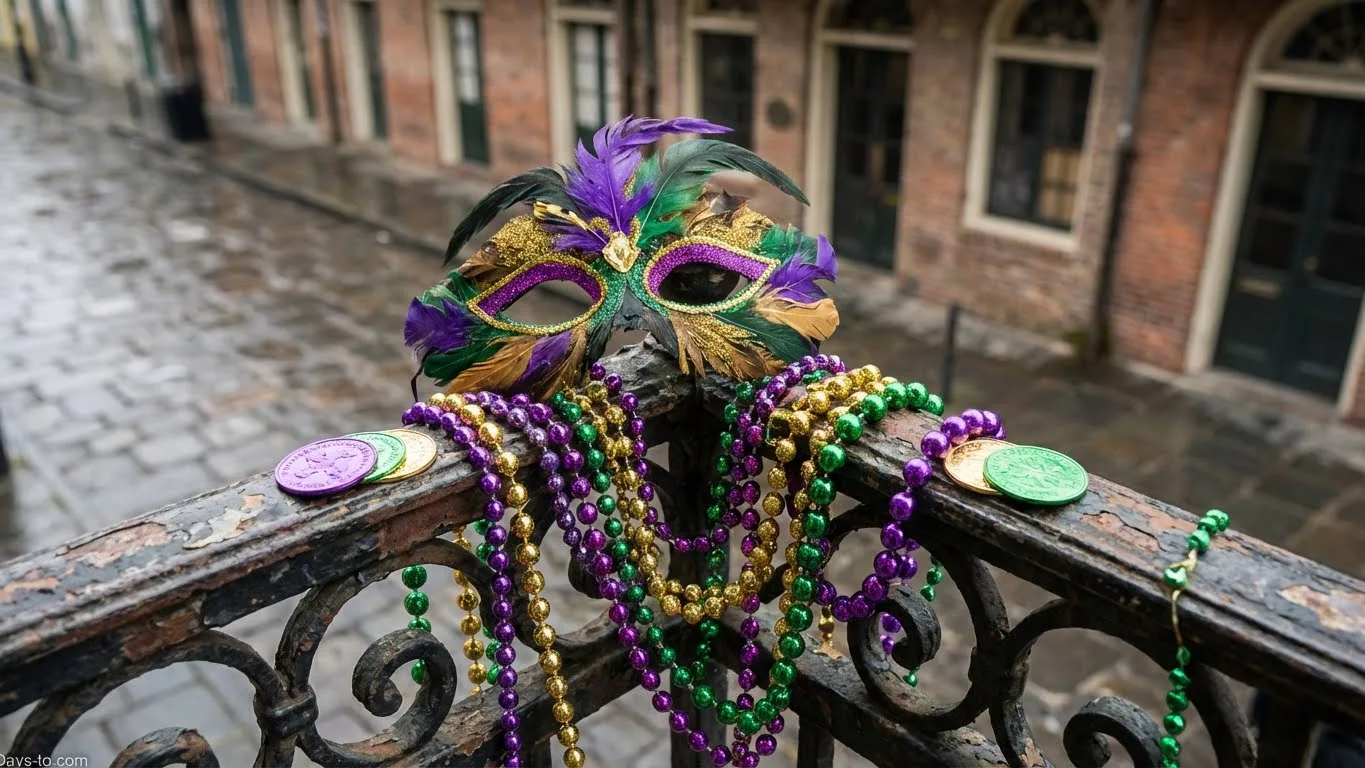
Wearing masks allows participants to escape their daily identities and social constraints. Originally, this practice allowed people of different classes to mingle without judgment during the balls and street parties. On Fat Tuesday specifically, floating laws often require float riders to wear masks to maintain the mystery and magic of the event. This anonymity encourages a spirit of collective joy where individual status matters less than the shared experience of the celebration.