Groundhog Day
| Year | Day | Date | Days To |
|---|---|---|---|
| 2027 | Tue | February 2, 2027 | 300 days |
| 2028 | Wed | February 2, 2028 | 665 days |
| 2029 | Fri | February 2, 2029 | 1031 days |
| 2030 | Sat | February 2, 2030 | 1396 days |
| 2031 | Sun | February 2, 2031 | 1761 days |
| 2032 | Mon | February 2, 2032 | 2126 days |
| 2033 | Wed | February 2, 2033 | 2492 days |
| 2034 | Thu | February 2, 2034 | 2857 days |
| 2035 | Fri | February 2, 2035 | 3222 days |
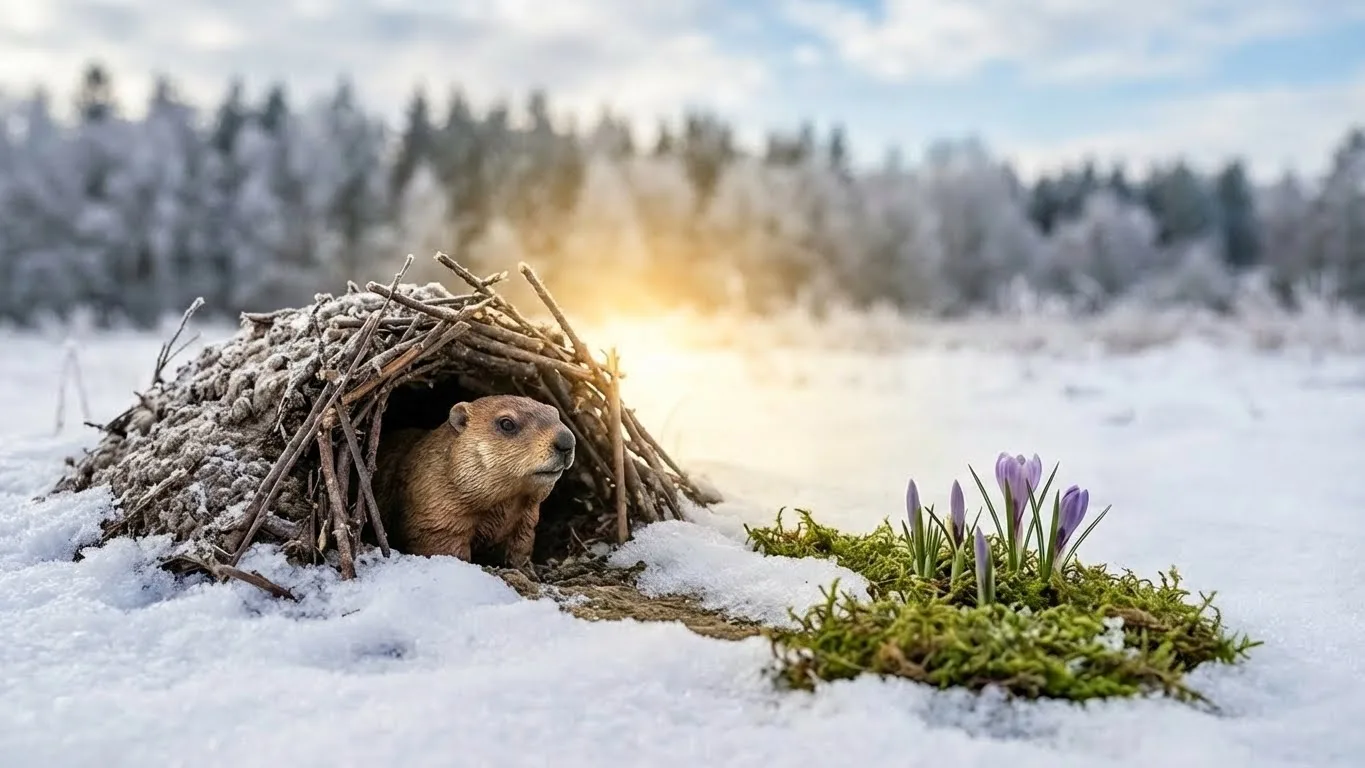
On the second day of February, a peculiar tradition captures the attention of millions across North America. While modern meteorology relies on satellites and radar, this day belongs to a furry, subterranean creature. Groundhog Day stands as a curious bridge between ancient folklore and modern curiosity, centering on a simple question: Will the groundhog see its shadow? This event, celebrated primarily in the United States and Canada, marks the midpoint between the winter solstice and the spring equinox.
Origins in Candlemas and German Tradition
The roots of this observance go much deeper than many realize. It traces back to the Christian festival of Candlemas Day, where clergy would bless and distribute candles. The weather on this specific day was believed to predict the remaining duration of winter. An old English song even claims, “If Candlemas be fair and bright, winter has another flight.” This belief merged with German folklore involving a hedgehog or badger.
When German settlers arrived in Pennsylvania in the 18th and 19th centuries, they brought their traditions with them. Lacking badgers, they found a suitable substitute in the native groundhog (also known as a woodchuck). They determined that if the animal emerged and saw its shadow due to clear skies, it would retreat into its burrow, signaling six more weeks of winter. Conversely, a cloudy day meant no shadow and an early spring.
Punxsutawney Phil: The King of Weather Prophets
The epicenter of this celebration is undeniably Punxsutawney, Pennsylvania. Here resides the most famous marmot in the world, Punxsutawney Phil. Since 1887, crowds have gathered at a site known as Gobbler’s Knob to witness the prediction. A group of dignitaries known as the Inner Circle, wearing top hats and tuxedos, presides over the ceremony.
Phil is treated with a level of reverence usually reserved for royalty. According to local lore, there is only one Phil, who owes his longevity to a magical “elixir of life” consumed every summer. While the scientific community might dispute his accuracy—records suggest he is correct roughly 40% of the time—the atmosphere of the event is less about preciseness and more about community spirit and joy.
| Famous Groundhog | Location | First Appearance | Key Characteristic |
|---|---|---|---|
| Punxsutawney Phil | Pennsylvania, USA | 1887 | The most famous and original weather predictor. |
| Wiarton Willie | Ontario, Canada | 1956 | Often an albino groundhog, distinct in appearance. |
| Shubenacadie Sam | Nova Scotia, Canada | 1987 | First to make a prediction due to the timezone. |
| General Beauregard Lee | Georgia, USA | 1981 | Known for high accuracy in the American South. |
Canadian Celebrations and Regional Variations
Canada embraces this tradition with equal enthusiasm. The most prominent figure is Wiarton Willie, an albino groundhog from Wiarton, Ontario. The festival surrounding Willie is a massive event, often including a winter carnival. Because of the vast geography of North America, different regions rely on their own local rodents. In Nova Scotia, Shubenacadie Sam is the first to make a prediction, getting a head start on his cousins to the west.
“The groundhog is like a sponge, soaking up the hopes of winter-weary people who just want a sign of warmth.”
Biology vs. Mythology
While the folklore is charming, the biology of the Marmota monax explains the behavior differently. Male groundhogs typically emerge in early February not to check the weather, but to scout for mates. They leave their hibernation dens briefly to see if females are active before going back to sleep until March. The presence of a shadow or sunlight has no biological impact on their decision to stay awake, though a warm temparature might encourage them to linger outside longer.
The longevity of this tradition speaks to a universal human desire: the need to manage the uncertainty of nature. In the depths of winter, people crave a milestone. Whether the prediction is for snow or sun, the event itself marks that spring is essentially inevitable. It brings communities together for a moment of lighthearted fun in an otherwise cold and dark season.