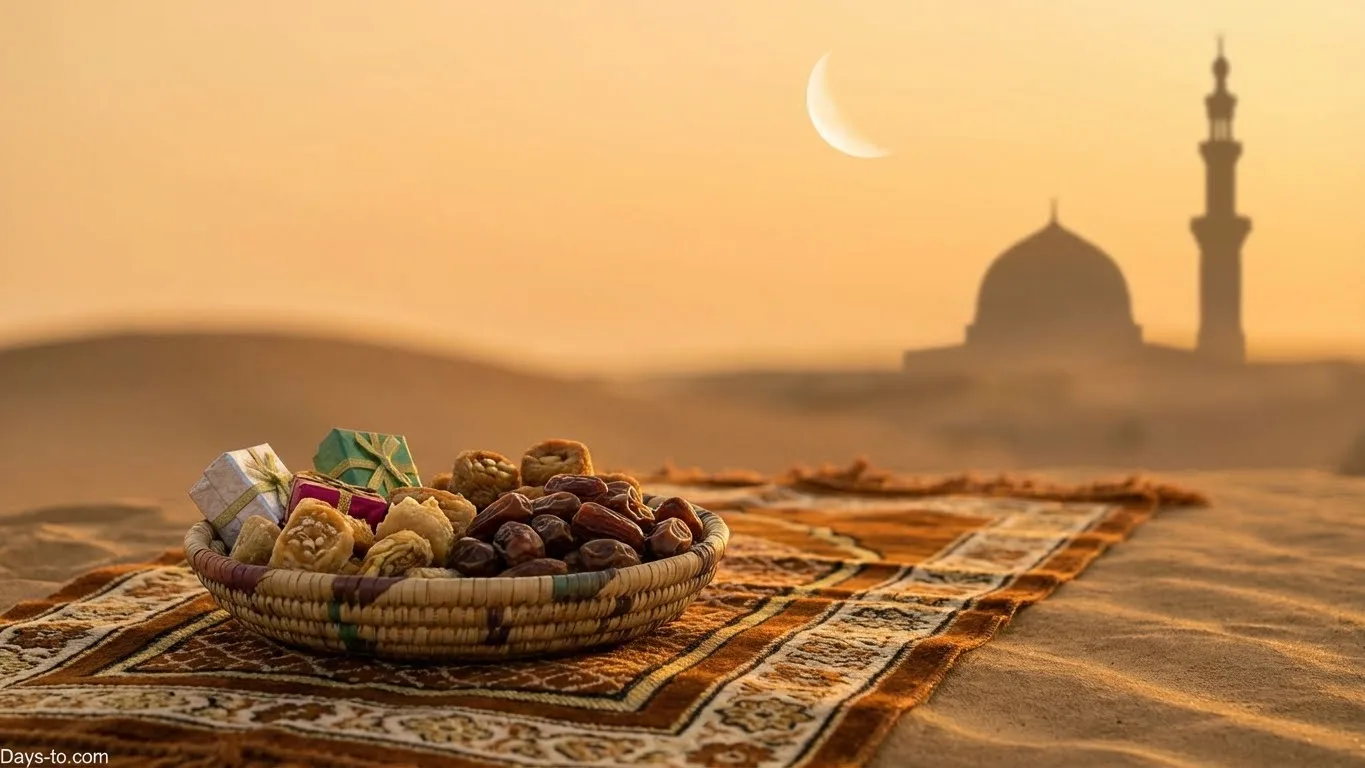
Eid Al Adha
| Year | Day | Date | Days To |
|---|---|---|---|
| 2026 | Wed | May 27, 2026 | 44 days |
| 2027 | Sun | May 16, 2027 | 398 days |
| 2028 | Fri | May 5, 2028 | 753 days |
| 2029 | Tue | April 24, 2029 | 1107 days |
| 2030 | Sat | April 13, 2030 | 1461 days |
| 2031 | Wed | April 2, 2031 | 1815 days |
| 2032 | Mon | March 22, 2032 | 2170 days |
| 2033 | Fri | March 11, 2033 | 2524 days |
| 2034 | Wed | March 1, 2034 | 2879 days |
| 2035 | Sun | February 18, 2035 | 3233 days |
Eid al-Adha, widely recognized as the Festival of Sacrifice, stands as the second and holiest of the two main holidays celebrated within Islam. This important event honors the willingness of Prophet Ibrahim (Abraham) to sacrifice his son as an act of obedience to God’s command. Before he could sacrifice his son, God provided a ram to sacrifice instead. This narrative underscores the values of devotion, submission, and absolute trust in the Creator. It is distinct from Eid al-Fitr, which marks the end of Ramadan, focusing instead on the act of sacrifice and charity.
Determining the Date of Observance
The timing of this festival relies strictly on the Islamic lunar calendar, specifically falling on the 10th day of Dhu al-Hijjah. This is the twelfth and final month of the Islamic year. Since the lunar year is approximately 11 days shorter than the Gregorian solar year, the date shifts backward annually. This movement means the festival is observed in different seasons over a 33-year cycle, occuring in winter, spring, summer, and autumn.
Visibility of the moon determines the exact beginning of the month. Therefore, the precise date may vary slightly by country depending on local moon sightings. It always coincides with the final rites of the Hajj pilgrimage in Mecca, serving as a unifying moment for Muslims globally.
Projected Dates for Coming Years
| Gregorian Year | Estimated Start Date | Islamic Year (Hijri) |
|---|---|---|
| 2026 | May 27 (Wednesday) | 1447 |
| 2027 | May 16 (Sunday) | 1448 |
| 2028 | May 4 (Thursday) | 1449 |
| 2029 | April 23 (Monday) | 1450 |
The Tradition of Qurbani
A central pillar of this observance is the act of Qurbani (or Udhiyah), which refers to the sacrifice of an animal, typically a sheep, goat, cow, or camel. This act is not merely a ritual but a profound gesture of gratitude and charity. The meat from the sacrificed animal is traditionally divided into three equal parts to ensure wealth circulation and community support.
- Family Share: One-third is retained for the immediate family to enjoy during the feast.
- Friends and Relatives: Another third is gifted to friends and extended kin to strengthen social bonds.
- Charitable Portion: The final third is donated to the poor and needy, ensuring that no one goes hungry during the festival.
By enforcing this distribution, the tradition emphasizes social justice and empathy. It reminds observers that true devotion involves caring for the less fortunate members of society. Those who cannot afford the sacrifice are not obligated to perform it, highlighting the faith’s practicality and fairness.
Prayers and Daily Observances
The day begins early with the Salat al-Eid, a special congregational prayer offered in large open spaces or mosques. Before the prayer, it is customary for individuals to perform Ghusl (a ritual purification bath) and wear their best clothing. The atmosphere is filled with the chanting of “Takbir,” praising the greatness of God. This auditory experience unifies the community before the sun has fully risen.
Following the prayer, people exchange the greeting “Eid Mubarak” (Blessed Eid) and embrace one another. The rest of the day is dedicated to visiting family, exchanging gifts, and enjoying festive meals. While the focus remains on the spiritual, the social element is undeniable, creating memories that span generations.
Connection to the Hajj Pilgrimage
Eid al-Adha coincides with the final days of Hajj, the annual pilgrimage to Mecca that every able-bodied and financially capable Muslim must perform once in a lifetime. While millions gather around the Kaaba in Saudi Arabia, Muslims elsewhere perform the Eid prayers in solidarity. The rites performed by pilgrims, such as the symbolic stoning of the pillars, mirror the trials faced by Prophet Ibrahim.
This synchronization creates a powerful sense of global brotherhood. Whether one is standing on the plains of Arafat or praying in a local community center, the spiritual focus remains identical. The days leading up to Eid, particularly the Day of Arafah (the day before Eid), are often spent in fasting by those not performing the pilgrimage to seek forgiveness.