Diwali
| Year | Day | Date | Days To |
|---|---|---|---|
| 2026 | Sun | November 8, 2026 | 214 days |
| 2027 | Fri | October 29, 2027 | 569 days |
| 2028 | Tue | October 17, 2028 | 923 days |
| 2029 | Mon | November 5, 2029 | 1307 days |
| 2030 | Sat | October 26, 2030 | 1662 days |
| 2031 | Fri | November 14, 2031 | 2046 days |
| 2032 | Tue | November 2, 2032 | 2400 days |
| 2033 | Sat | October 22, 2033 | 2754 days |
| 2034 | Fri | November 10, 2034 | 3138 days |
| 2035 | Tue | October 30, 2035 | 3492 days |
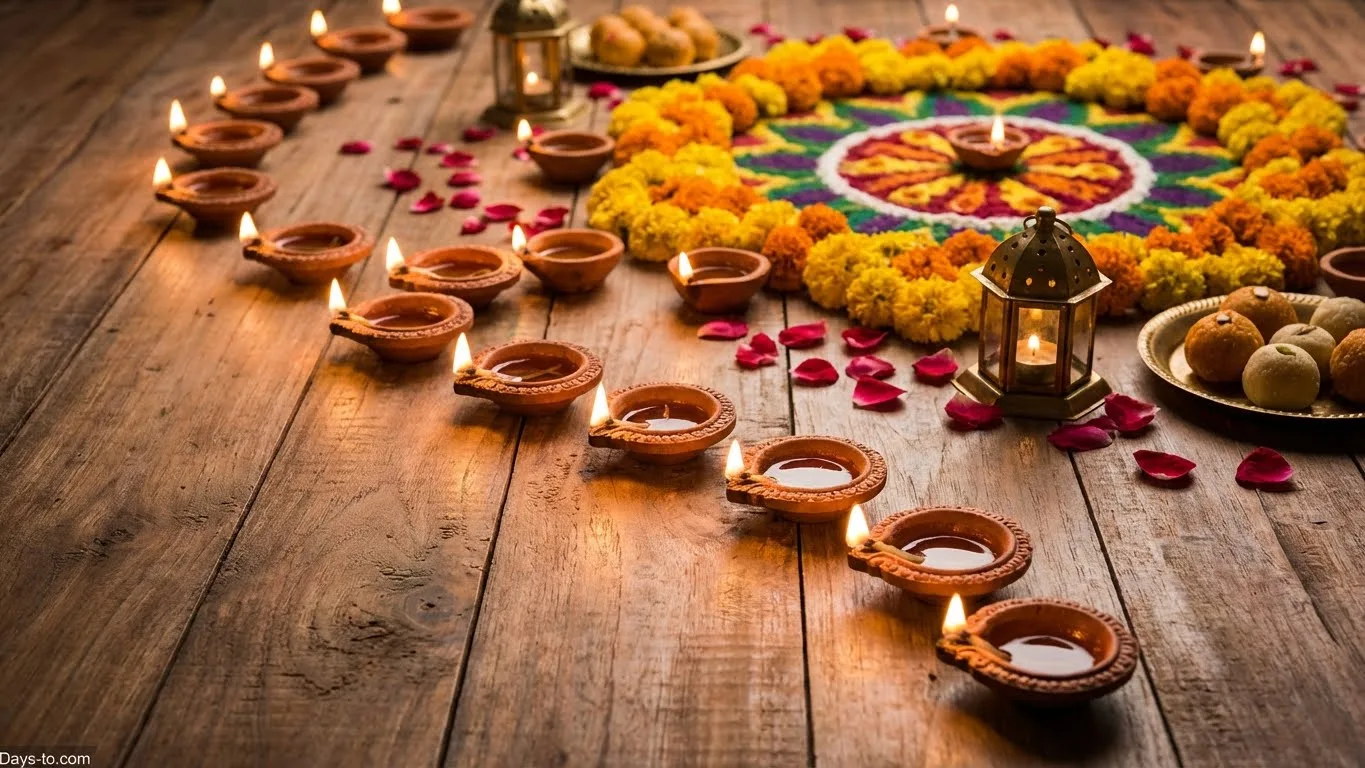
India transforms into a radiant landscape of gold and warmth during this time of year. Millions of small clay lamps, known as diyas, illuminate homes, streets, and riversides. This is Diwali, arguably the most vital and visually stunning event in the Indian cultural calendar. It is not merely a festival; it is a profound observation of the victory of light over darkness and knowledge over ignorance. Families gather, old ledgers are closed, and new beginnings are embraced with open hearts. The atmosphere is thick with the scent of incense and the sound of joy.
Historical Origins and Mythology
The roots of this celebration run deep into ancient history. While the specific legends vary by region, the core message remains unified. In North India, the festival commemorates the return of Lord Rama to Ayodhya after 14 years of exile. He defeated the demon king Ravana, symbolizing the triumph of good virtue over evil intent. The citizens of his kingdom lit rows of lamps to guide his path home in the dark.
Alternatively, in the South, the focus shifts to Lord Krishna. Legends state that he defeated the demon Narakasura on this day, liberating thousands from captivity. This act freed the world from fear. Regardless of the specific story, the underlying theme is the restoration of balance and the celebration of inner spiritual strength. It is a time when the distinct line between the divine and the earthly seems to blur.
The Five Days of Celebration
Diwali is not a single day of festivity. It is an observance spread over five distinct days, each holding a unique importance in the cultural tapestry. Understanding this structure helps observers appreciate the depth of the tradition.
| Festival Day | Traditional Name | Primary Focus |
|---|---|---|
| Day 1 | Dhanteras | Worshipping wealth; buying gold or silver. |
| Day 2 | Naraka Chaturdashi | Early morning rituals; removal of negativity. |
| Day 3 | Lakshmi Puja | The main day; worship of the Goddess of Prosperity. |
| Day 4 | Govardhan Puja | Gratitude toward nature; celebrating the harvest. |
| Day 5 | Bhai Dooj | Celebrating the bond between brothers and sisters. |
Day One: Dhanteras
The festival begins with a focus on prosperity. Homes are cleaned thoroughly to welcome positive energy. It is considered extremely auspicious to purchase precious metals like gold or kitchen utensils on this day. Markets are often crowded with people buying new items for their households. The word ‘Dhan’ literally translates to wealth. Devotees light lamps specifically to honor Yama, ensuring the well-being of their family members for the coming year.
Day Three: The Main Event
The third day marks the height of the celebrations. As evening falls, households perform the Lakshmi Puja. This prayer ceremony is dedicated to the Goddess Lakshmi, who represents wealth and purity. Families dress in their finest traditional attire. Doors and windows are kept open to allow the blessings to enter freely. Following the prayers, the night sky comes alive with fireworks, and the ground glows with the light of countless earthen lamps.
Art and Decorations
Visual beauty is central to the experience. Entrances of homes are decorated with Rangoli. These are intricate patterns created on the floor using colored rice, dry flour, colored sand, or flower petals. The designs are often geometric or floral, meant to be welcoming symbols for deities and guests alike. Making these patterns is often a communal activity, bringing generations together.
The vibrant colors of the Rangoli contrast beautifully with the warm yellow glow of the oil lamps. In modern times, electric lights are also used, but the traditional clay diya with a cotton wick remains the heart of the ritual. The effort put into decoration reflects the joy within the household.
Culinary Traditions
Food plays a massive role in bonding. Sweets, or Mithai, are exchanged between neighbors, friends, and relatives. This exchange signifies the sweetness of relationships and the dissolving of past grievances. Popular treats include Gulab Jamun, Barfi, and Ladoo. Savory snacks are also prepared in bulk. The kitchen remains a hub of activity for days. Sharing food is considered a way to share one’s happiness and fortune with the community.
Economic Importance
Beyond the spiritual, this period is important for the economy. It marks the beginning of the new financial year for many Indian businesses. Shopkeepers perform rituals on their account books, known as Chopda Pujan. It is a major shopping season, comparable to the holiday shopping rushes seen in the West. From small street vendors to large luxury retailers, everyone sees a surge in activity. The flow of money during this time is seen as the circulation of Lakshmi’s energy within society.